Tuesday, April 28, 2015

Previewing the Saints 2015 Draft

            The NFL draft begins this Thursday night (live on TV and everything) and concludes on Saturday. The New Orleans Saints currently hold 9 picks in the draft, including 5 within the top 80. This is the most picks they’ve had since 2002. After a disappointing 7-9 season that revealed the pitfalls of the current Saints, the team has aggressively and wisely shifted course. They traded away star tight end Jimmy Graham, guard Ben Grubbs, wide receiver Kenny Stills, and the 112th pick and in return they received center Max Unger, linebacker Dannell Ellerbe, the 31st pick, the 78th pick, and the 154th pick.

Round-Pick
1-13
1-31
2-44
3-75
3-78
5-148
5-154
6-187
7-230

            With these picks the Saints, unlike in past years, now have the ability to be flexible in the draft. They can trade up if there is a player that they really want—although their recent history of draft trades suggests that that may not be such a good idea. Since it’s unlikely that they’ll carry nine draft picks into training camp, they could also flip one of them for a 2016 draft selection. Such a move will allow the Saints to parlay this year’s flexibility into future seasons.  This type of strategy has been a staple of teams like the Patriots, Packers, and 49ers and it helps account for their consistent success. More draft picks means more chances to hit on good players. With all this in mind, let’s turn now to the Saints’ most pressing draft needs (in no particular order).

1. Nose tackle: The Saints featured the worst run defense in the NFL last year according to DVOA. Opposing running backs averaged 4.78 yards per attempt against Rob Ryan’s defense. A 300 plus pound nose tackle could cover multiple gaps and demand the attention of interior offensive linemen. That would free up other players for Ryan’s creative blitzing schemes. It would also allow pass rushing defensive end Cam Jordan more opportunities to go after opposing quarterbacks.

2. Cornerback: As the injuries mounted in the Saints secondary last season, they relied on an array of undrafted rookies and street free agents to fill in the gaps. This offseason the Saints signed cornerback/holding penalty machine Brandon Browner to play opposite starter Keenan Lewis. Their other corners include Jets castoff Kyle Wilson and 2014 second rounder Stanley Jean-Baptise, who couldn’t sniff the field last year despite the team’s injury woes. A high round selection on another corner would be a pick well spent.
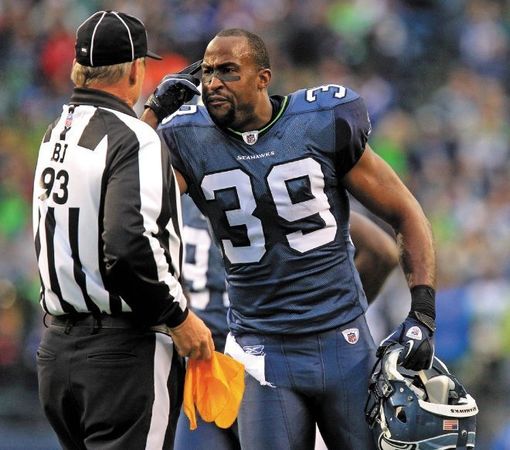
Get used to a lot of those yellow things with Browner out there. 

3. Linebacker: The Saints linebacking corps and secondary similarly struggled against opposing rushers. The Saints ranked 29th in second level rushing yards and 31st in open field yards, metrics created by Football Outsiders designed to measure yards gained by opposing running backs 5-10 and 10+ yards beyond the line of scrimmage. With better linebackers the defense could limit the damage caused by opposing running backs.

4.  Interior offensive line: The Saints need an infusion of youth on the offensive line. Right tackle Zach Strief and right guard Jahri Evans are 31, newly arrived center Max Unger is 29 and has issues staying healthy. The left guard spot is currently empty and left tackle Terron Armstead is young, 23, but inexperienced. Investing a high round pick on an offensive line would bring some much needed youth and cushion against injury or decline from the other starters.

5. Wide receiver: The Saints spent a 1st rounder on wide receiver last year, but the trade of Kenny Stills means they could use an outside wide receiver. With Mark Ingram and C.J. Spiller as the starting running backs, the Saints seem to have shifted to a more run-heavy approach. A deep threat would diversify the Saints offense. It would prevent opposing defenses from stacking the line of scrimmage against the run and offer the potential for game changing plays.


            By the end of the day on Saturday, the Saints will have completed their 2015 draft. Do they invest heavily in the defense? Trade up? Trade down and acquire assets for the future? Regardless of what they do, their 2015 season will be shaped by the moves they make over the coming days. 

Thursday, April 23, 2015

Justified: The Final Season

            Throughout its history Justified’s seasons ranged from sensational (seasons two and six) to subpar (season five). Yet the show always maintained a strong hold on its characters and setting. Rural Harlan County, Kentucky hosted the mob and Marshals with equal aplomb. A bevy of notable characters weaved their way in and out of the narrative, from Raylan’s criminal father Arlo to aspiring drug lord Loretta to Dewey Crowe, the malapropism machine. Characters met their fates in a variety of ways from the tragic (Mags Bennett) to the dumb (Danny Crowe) to the explosive (poor Mr. Picker). During its run, Justified showrunner Graham Yost and his staff (and the spirit of Elmore Leonard) questioned whether the show’s three central characters, Raylan, Ava, and Boyd could change their lives and escape the pull of Harlan County.

This is how we should remember Raylan. 

            The final season revealed that Raylan Givens could leave Harlan behind. He confronted the ghost of his father by breaking into his father’s shed—disappointed when it did not reveal the horrors that he had always imagined. He rid himself of his father’s land and eventually his grave. Raylan even managed to demonstrate the slightest personal growth. In the pilot episode of Justified, Raylan had goaded a Miami gangster into drawing his gun so Raylan could shoot him. In the series finale, Raylan pursued a similar track with Boyd. He demanded that Boyd grab a pistol so Raylan could pull down on him, ending their feud forever. Boyd refused and instead dared Raylan to cross the line from lawman with a code to cold blooded murderer. Raylan refused, instead allowing Boyd to live out the remainder of his life in jail. As the finale jumped ahead it time, Justified wanted to remind the viewer that there was some things Raylan couldn’t change. He had a new hat (won as a result of his confrontation with young gunslinger Boon), but the same attitude. And no matter how hard he tried, he still couldn’t make things work with his ex-wife Winona.  
            Ava Crowder also won a better life for herself. Ava was a survivor. She survived an abusive husband, aspiring outlaw fiancĂ©, and prison (in one of the show’s least advised arcs). When the series began, Ava had just murdered her abusive husband Bowman. The pair had married out of high school and Bowman, a star football player, promised her a life outside of Harlan. Bowman took his failures out on Ava. Ava then dated Raylan and Boyd, plotting a way out of the poverty and violence of Harlan. Continually thwarted in those efforts, Ava, blazed her own path to freedom. In the final season, she shot Boyd, drew on Raylan, and stole ten million dollars in cash. She escaped from Harlan in the back of a pet grooming van. Although Raylan managed to track her down, he let her go, fulfilling his promise, from the end of season five, to keep her (and her son) safe. 


            Boyd meanwhile completed his transformation from criminal for hire to self-styled “outlaw.” As Raylan pointed out in their final scene together, Boyd’s had taken to repeating himself. He began as a preacher and ended as one. Yet Boyd’s journey was a bit more complicated. He began the series by espousing his self-serving belief in white supremacy, but it was only a means to an end. Boyd’s goals were always money, power, and cultivating his own legacy. His exaggerated speaking style, his skill with explosives, and charisma all honed his reputation. Why kill Mr. Picker when you can blow him up in a hotel room in front of Wynn Duffy and Katherine Hale instead? Boyd’s ego allows Raylan to fool him into thinking that Ava has died in the finale. When Boyd questions why Raylan has come to tell him about Ava, Raylan responds that they dug coal together—a common refrain throughout the series. Boyd believes it is this bond, born out of their shared experience and carried out through years of antagonism and a legendary rivalry that brought Raylan to visit him. Viewed through the lens of his own legend, it makes all the sense in the world. Who is the great Raylan Givens without his nemesis Boyd Crowder?
            While it rarely found itself discussed among the rarified air of Breaking Bad, Mad Men, or the other contenders for the “Best Show on TV,” Justified managed to be amusing, entertaining, and heartbreaking. The dialogue crackled. We laughed at the stupidity of Harlan’s criminal element, felt sympathy for Raylan’s colleagues as he piled up body after body, and witnessed the desperation and poverty of Harlan County. And how people like Mags Bennett and Ellstin Limehouse carved out lives for themselves when no one else could be bothered to care. Even at its lowest moments Justified was always fun to watch. And that’s how we should remember it.

Tuesday, April 14, 2015

Edge of Tomorrow: Live, Die, Repeat

            Now available on most streaming services, the oddly named Edge of Tomorrow—how can tomorrow have an edge?—succeeds as an old fashioned summer action movie. The film features a video game style plot, reminds us of Tom Cruise’s charisma, and balances Cruise’s excesses with dark humor and a physically superior Emily Blunt.  

Cruise, Blunt, that giant paddle thing, what's not to like? 
Edge of Tomorrow purees video games, Groundhog Day, Saving Private Ryan, and alien invasion movies into one mostly coherent plot. Cruise plays a PR flack for the army assigned to cover a Normandy style invasion against alien invaders. After unsuccessfully trying to blackmail a general (Brendan Gleeson) to get out of the assignment, Cruise winds up as a foot soldier on the front lines. The invasion fails and Cruise dies, but he manages to steal the aliens’ secret power—he can reset the day of the invasion over and over. Cruise meets Rita (Emily Blunt), the “Angel of Verdun,” who once had and lost the same ability. The two team up with a scientist and plot expediter (Noah Taylor), to defeat the alien invasion. You can guess how the film goes from there. The film’s World War 2 analogies are as subtle as a hammer to the head. The invasion emanated from Germany, the Russians (and Chinese!) are fighting on the Eastern front (presumably so the West can later ignore their contributions), the Allies (known as the United Defense Force) launch their invasion 5 years into the war, and land in NORMANDY.

            The film relies on Cruise’s charisma to carry the film. He possesses an impressive ability to command the screen. At the beginning of the film, he’s cocky, smarmy, and a little full of himself. So he’s Tom Cruise. Then he dies, again and again. Whether we love or hate him, he dies for us. His deaths elicit our sympathy and our laughter. The first time he’s killed his face melts. After each death, Cruise is reborn, again and again. The smug asshole transforms into a man desperate to survive. Every time he dies, Cruise gets a little smarter, a little better. He keeps trying and failing to save humanity from alien invaders who look a lot like those robot things from the Matrix movies. By the end of the film, Cruise succeeds, flashing that brash smile from Top Gun. Love him or hate him, he lives to entertain his audience—even desperately so.


             Edge of Tomorrow recognizes that Cruise works best by giving him a powerful woman to play off of. Instead of relegating Blunt to the role of damsel in distress, she proves superior to Cruise in most ways. Having already been through the same experience, she’s initially a step ahead of him. She trains Cruise up to fighting strength and seems to enjoy shooting him in the head over and over to reset the day. There’s an obligatory kiss between the two of them, but it’s not horribly off putting. She offers a physicality and hard assed attitude that prevents Cruise’s charisma from reducing her to a sideshow.

            Edge of Tomorrow succeeds because it remembers that the first duty of a summer movie is to entertain. Instead of moving plot in a franchise, trying to set up a new franchise, or making catchy pop culture references, the film just tries to be entertaining. It mines a lot of dark humor from killing Cruise in so many different ways. His exacerbation at the whole situation becomes our outlet for laughter. His face melts, he gets run over by trucks, shot in the head by Emily Blunt, crushed by crashing planes, and gets a hole blown in his chest. But he wakes up again yesterday and it’s all okay. In the end, humanity triumphs, Cruise gets to be himself, and we all walk away happy. What’s wrong with that? 

Tuesday, April 7, 2015

Kenny Stills Trade

            As we continue our journey through the Saints offseason, let’s look at the other major trade that the Saints pulled off: sending wide receiver Kenny Stills to the Miami Dolphins for a 3rd round pick and linebacker Dannell Ellerbe.

            So let’s start by breaking down the components of the trade. First off is Kenny Stills. Stills was a 2013 fifth round pick of the Saints (144th overall). In two seasons with the team, Stills played in 31 (of 32) games. He caught 95 passes for 1,572 yards, good for an average of 16.5 yards per catch. 8 of his 95 receptions went for touchdowns. In his two seasons with the team, Stills emerged as the deep threat in the Saints passing offense. In 2013, Stills’ average reception came 13.9 yards past the line of scrimmage, tops in the NFL. For all the Saints recent troubles with the draft, Stills represented a big success. He was a significant return on the Saints’ investment; the 144th pick is worth 3 AV. In his two years with the Saints, Stills produced 14 AV.

Stills will be catching passes in Miami next year. 

            In return the Saints received  Miami’s third round pick, number 78. The 78th pick in the draft is worth 7.9 AV, according to Chase Stuart’s draft pick calculator. In a vacuum, the Saints took the 144th pick in the draft, got two years of above average production and then flipped it for the 78th pick. They also traded the two more years of team control of Stills for four of the pick. They also have the option to move up or down or keep the pick. This is how smart franchises operate. They hit on late round picks and flip them for more than they were originally worth.

            So the question is, what the hell is Dannell Ellerbe (and his onerous contract) doing in this trade? The Saints spent much of their offseason clearing out desperately needed cap room (trading Graham, Ben Grubbs, releasing Curtis Lofton etc.), only to take on the last three years of Ellerbe’s 5 year, 35 million dollar contract. Apart from one standout season with the Ravens, Ellerbe has never been a particularly productive player. In six seasons, he’s produced 20 AV (compared to Stills’ 14 in 2). His only productive season came in his last year in Baltimore. He parlayed that 4.5 sack, 66 tackle season into a big contract from the Dolphins. Here’s a hint to the rest of the league, when Baltimore lets a defender leave, they have a reason. The Dolphins gave Ellerbe 14 million dollars guaranteed including a 7 million dollar signing bonus. In early March, it was reported that Miami was planning to release Ellerbe. Instead, the Saints traded for him and instead of releasing him, restructured his contract.

Why is he a Saint? 

            Now Ellerbe’s contract lasts three years and pays him 15.2 million dollars with 5.2 million guaranteed. In 2015, he’s collecting a base salary of 1.1 million with 800,000 in bonuses, counting only 1.9 million against the cap. That figure, however, jumps to 5.9 million in 2016 and 2017. The worst part is most of that, 4.1 million each year, is base salary, meaning that if the Saints cut Ellerbe, that full amount counts against their cap. With roster bonuses of 1 and 1.1 million, there’s little room to push that cap number down. He has to either produce or be dead weight against the cap. The worst part of the Ellerbe situation is that it’s contracts like these (with Curtis Lofton Ben Grubbs, etc.) that put the Saints in salary cap hell to begin with.


            So on the one hand, the Saints have done a good job developing Kenny Stills into a trade-able asset. On the other, they repeated the mistakes of the past few years (that nearly crippled them) by signing an overpriced veteran to an unwieldy salary. 

Tuesday, March 31, 2015

Jimmy Pays the Price

With the crawfish boil over, now we can turn our attention to one of Louisiana’s other great traditions: the Saints. Unfortunately the 2014 season fell somewhere between disappointment and disaster. Pundits, Saints fans, and even the team thought the Saints would be a Super Bowl contender. With little salary cap space last offseason, the Saints re-signed tight end Jimmy Graham and added safety Jarius Byrd to bolster the defensive backfield and put the team over the top. Instead, injuries and ineffectiveness plagued the team throughout the season. A heartbreaking Week 1 loss to the hated Falcons set the stage for the miserable season that followed. By the end of the year, the Saints were left wondering where it had all gone wrong.

          This week let’s focus on the most significant move the Saints have made this offseason: the trade of star tight end Jimmy Graham and a fourth round pick (109th overall) to the Seattle Seahawks for center Max Unger and a first rounder (31st overall). We’ll break down this trade in a few ways; first, did the Saints get good value for Graham? And second, what does this mean for the Saints going forward? 

Bye Jimmy! 

          Using the draft value chart created by Chase Stuart of Football Perspective (based on the value produced by each pick over a 30 year period), the Saints traded away the 109th pick, worth 4.7 points of approximate value (a measure of individual player production developed by Pro-Football Reference). In return, they received the 31st pick worth 12.7, for a net of 8 AV. 8 points of AV is equivalent to the 65th pick in the draft (the 1st pick of the third round). On first glance, it seems impressive that the Saints netted a 1st rounder for Graham. When you factor in the 4th round pick, the trade is much less than it seems. The values of Graham and Unger going forward are difficult to discern. Unger missed ten games last season due to injury and Graham has been similarly hampered by the injury bug. What is clear is that the Saints traded away their best offensive player not named Drew Brees for a starting center and the equivalent of the 65th pick in the draft. Hardly an impressive haul.

          The Graham trade does provide the Saints something they desperately needed: salary cap relief in 2016 and 2017. As result of the 4 year, 40 million dollar contract signed last year, Graham counted eight million against the cap this year, nine million in 2016 and ten million in 2017. By trading him the Saints paid a heavy price this year. The Saints shed Graham’s salary in the trade, but the remainder of his salary bonus accelerated onto this year’s cap. By trading him, Graham will eat up nine million dollars in cap space this year. After this year, however, Graham is off the Saints books, freeing up nineteen million dollars for 2016 and 2017. The relief will be especially useful in 2016. Currently, the Saints have 131.5 million committed to the cap for 2016, with Graham’s contract they would have been perilously close to the salary cap ceiling again. Now they have money to devote to other areas of the roster, like signing pass rusher Cameron Jordan to a contract extension.

Hi, Max! 

          What does this mean on the field? The trade cost the Saints their best offensive weapon. As a tight end, Graham caused matchup problems for opposing defenses, requiring double teams and opening up other options for the rest of the offense. While the Saints seem high on backup Josh Hill, he can’t and won’t replace Graham’s production. With the downgrade at the tight end spot, the improvements will have to come elsewhere. Unger should bolster the Saints interior offensive line, helping out in both pass protection and the run game. Last season, with Unger in the lineup, the Seahawks averaged 203.8 yards per game rushing. Without him, the Seahawks averaged nearly fifty yards fewer per game (153.9). A better run game will help, but it can’t replace Graham.


          Overall, it’s hard to see how the trade helps the Saints in 2015. They traded away the second best tight end in the NFL for a starting center and the equivalent of the 1st pick in the third round. The deal provides salary cap relief, but not until 2016 and 2017. Last season, the Saints mortgaged their salary cap future to make a Super Bowl run. This offseason that mortgage came due. 

Tuesday, March 24, 2015

Crawfish Boil 2015 Recap

          Saturday March 14 was the 8th Annual DGA Family and Friends Crawfish boil and we are happy to report that it was a smashing success. In the mid-afternoon, the sun broke through after days of rain in south Louisiana. Winos and Tacos once again served as a great location. There was abundant alcohol, crawfish, and we polished off six dozen cupcakes (Benson’s son Ieuan had at least 3). Unfortunately Jamie was at trial and couldn’t make it home in time. Her husband Ryan, however, ably carried on in her absence, watching NCAA basketball at the bar, as he always does.

It's back again. 

          The boil began with Doug’s introductory address on this year’s theme: Do You Know What it Means. DGA favorite Davis Rogan (who fulfilled a longstanding promise to Doug and brought his lovely wife Stephanie to the show) then played his own version of the Louis Armstrong classic, Do You Know What It Means to Miss New Orleans. He followed with a set mixing some of his songs from his new CD (So Long) as well as some classic Davis songs (Hurricane, New Ninth Ward). At one point during the show, the DGA employees as well as their spouses came up on stage and served as the background singers for the song, Mr. Rogan, Mr. Rogan. Mostly they just had to chant “Mr. Rogan, Mr. Rogan” on queue. Doug and Mary exhibited a great amount of enthusiasm. The video of the performance will be available on a future blog post.

All the crawfish... 

          After loading up on more crawfish, jambalaya, and tacos, the boil kept plugging along. Up next was the Philadelphia based Dirk Quinn Band. Dirk proved himself a talented and inventive guitarist. The band imaginatively fused funk and jazz and entertained a whole lot of people along the way. At one point, Mark Levron, Davis’s longtime trumpet player, joined in. Mark’s willingness to jump in and play epitomized what we all love about the boil- people coming together to share a sense of friendship and camaraderie. The Dirk Quinn Band was first instrumental band ever to the play at the boil and they gave us a great show.

Benny Turner knows how to put on a show

          We ended with Benny Turner and the Real Blues featuring Sam Joyner. Benny was the big surprise of last year’s boil. We brought him in knowing that he had the resume of a top flight blues musician and he blew us all away. He sang, he mingled with the crowd, and offered a performance that none of us had ever seen before. We knew we had to have him back again. And this year, Benny managed to do it all again. It’s difficult to render Benny’s performance into words. He brings an infectious spirit and enthusiasm. He not only feeds off the energy of the crowd, he elevates it.


          At around five o’clock or so, the music had finished and the crowd began to disperse. Guests left with bellies full of food and the souls bolstered by some truly wonderful music. And the best part? We get to do it all again next year. 

Tuesday, March 10, 2015

Crawfish boil: This Saturday!

          So we’ve gone over the history of crawfish, taught you how to eat them, told you where to stay, where to eat, and things to do in New Orleans. Now there’s only one more thing to do, actually have the crawfish boil. So let’s run down the full details of the bands, location, and the other important info.


          When: This Saturday March 14, 2015 at 12:00 P.M.

          Where: Winos and Tacos
                   321 North Columbia Street
                   Covington, LA 70433

          First a little background history, this will be the 8th DGA Family and Friends Crawfish boil. Over the years, we have been thrilled to watch the boil grow in size and scope. It started out as a celebration consisting mostly of the DGA employees, their families, and friends from Louisiana. It’s changed locations and bands a few times, but gotten bigger and better every single year. Now we have people who fly in from across the country to spend an afternoon with good food, friends, and music. The boil is an opportunity to share our traditions and we look forward to extending some of that famous Louisiana hospitality.

How could we say no to that face? 
           Now that we have those important details out of the way, let’s get down to the music. Leading off will be DGA favorite, Davis Rogan. This is Davis’s fourth consecutive appearance at the crawfish boil. He never fails to entertain and we’re thrilled to have him back. 


Next up, will be a new band all the way from Philadelphia, the Dirk Quinn Band. The Dirk Quinn Band is known for its experimental take on funk and jazz.

He was so good, we just had to bring him back. 

And finally, we’ve brought back Benny Turner, who if you remember from last year’s boil electrified the audience by playing while sitting in the crowd. So he will close out what will (hopefully) be the biggest and best crawfish boil so far. It’ll take a lot to top last year, but we think we can do it. 

          See you Saturday!