Wednesday, February 15, 2012

Northshore Fun: Breweries and Vineyards

Posted by Benson


There's no doubt that New Orleans is a fantastic place for a good time, but if you're coming down for the crawfish boil, there's a lot of fun things to do on the Northshore as well.


The crawfish boil is in Madisonville, which is on the Northshore of Lake Pontchartrain.  It's about forty minutes across the Causeway from New Orleans.  If you want to spend all of your crawfish free time in the city, you'll have an awesome time for sure, but if you want to experience a bit of the Northshore, what's a better place to start than breweries and vineyards?


The Northshore is home to two microbreweries and one vineyard, all of which you can visit for tours and tastings.


In historic Old Covington you'll find the Heiner Brau microbrewery.  Heiner Brau is a charming microbrewery in the heart of Old Covington.  You'll find it on Lockwood street a couple of blocks away from the courthouse (and Bill's house).  I have to say that I am developing a growing appreciation for Heiner Brau's brews.  Brewmaster Henryk Orlik is incredibly well schooled in the German brewing arts, and has produced a delightful range of brews.  Of course, the Oktoberfest is a favorite seasonal of mine, but the Bayou Bock is an awesome beer that the brewery makes year round.  It has much of what I appreciate in a great beer: smooth on the palate, a rich malty flavor, and flowery hops.


Heiner Brau just started doing tours again too.  You can visit the brewery on the second and fourth Saturday every month, which works out for us since March 10th is the second Saturday.  Tours start at 10:00 a.m., 10:45 a.m., and 11:30 a.m., so you can pop in for a tour and still have plenty of time to make it to the crawfish boil.  In the past, the Heiner Brau tour has been a relaxed, welcoming experience paired with a veritable waterfall of tasting.  I haven't been to the brewery's new tour setup, but I think it will be much of the same.  I'll swing by this weekend and report back.


The other brewery that you can visit on the Northshore is one of my favorite places in the world: The Abita Brewery.  If you know much about me, you know that I am a huge fan of the Abita Brewery.  I've watched this local favorite climb higher and higher in the US brewing world and still maintain its rigid adherence quality.  Defying the recession, the Abita Brewery is expanding yet again, and sending its amazing libations farther around the country than ever before!  The best part about this time of year though is that one of my favorite Abita brews, the Mardi Gras Bock, is back in season.


I highly recommend the Abita Brewery tour.  The Abita Brewery has set tour times, but on Saturdays the tasting room is open from 10:00 a.m. to 3:00 p.m.  Tours are on the hour starting at 11.  The tasting room is nice, with all of the brewery's beers on tap and as many trips to the tap as you want.  Unfortunately, the Abita tour will probably be a little less intimate than Heiner Brau.  As the Abita Brewery has become more successful, the tours have become a lot more popular than they once were.  Just remember to wear closed toed shoes or they'll make you wear booties.  And here's a pro tip:  If the tasting room is crowded and the tour looks packed, just hang back in the tasting room and hob nob with the employees in there.  They'll tell you whatever you want to know and its easier to get to the taps.


Finally, if beer isn't your thing, and even if it is, you can visit Pontchartrain Vineyards for a change of pace.  one of the few vineyards around New Orleans, Pontchartrain Vineyards is rather unique.  The winery is a ways up north of Covington in Bush, LA, but it'll only take you about 15 minutes to get there once you're on the Northshore.  The tasting room is open Wednesday through Sunday from noon until 4 p.m.


My wife and sister-in-law really enjoy visiting the tasting room.  Like Heiner Brau, it isn't heavily traveled and you get to have a lot of one on one contact with the proprietors, who are always excited to talk about their wines.  Tastings are five dollars, but it is a very modest fee for the experience.


If you're feeling frisky, and you have someone willing to do the driving, you could head over to the Northshore early on Saturday morning and hit all three before the boil.  You can start out at Heiner Brau in Covington with the 10:00 a.m. tour, slide 10 minutes east to Abita for the brewery tour, take a shortcut from Abita up to Bush when the Pontchartrain Vineyards tasting room opens as noon, and be back in Madisonville for the crawfish boil by 1:00!


If you don't feel like leaving New Orleans, you can still have some fun visiting microbreweries.  New Orleans is home to NOLA Brewing and a few other microbreweries.  I've focused on NOLA Brewing for a couple of reasons.  First, NOLA Brewing has a brewery tour every Friday at 2:00 p.m., but more importantly, NOLA Brewing has been making some awesome beers!  The brewery has been operating since 2008, so it is a relative newcomer, but its beer is master-crafted.  


I am a particular fan of the Hopitoulas IPA.  At 6% ABV it is a little stiff for a beer.  It has a nice, hoppy flavor without it being overpowering, and you get a brisk hint of citrus.  It has the full flavor you can expect in a good IPA, but the balance is such that it doesn't feel like you're being assaulted by hops.


If liquor is your thing, New Orleans is also home to several distilleries, such as the Old New Orleans rum distillery.  Old New Orleans has daily tours Monday through Friday at 12, 2, and 4 p.m.  On Saturdays, tours are at 2 and 4 p.m.  The tours are 10 bucks, but I hear that they are fun.  I've never been myself, but I have heard good things.

Wednesday, February 8, 2012

Cheers!

Posted by Benson


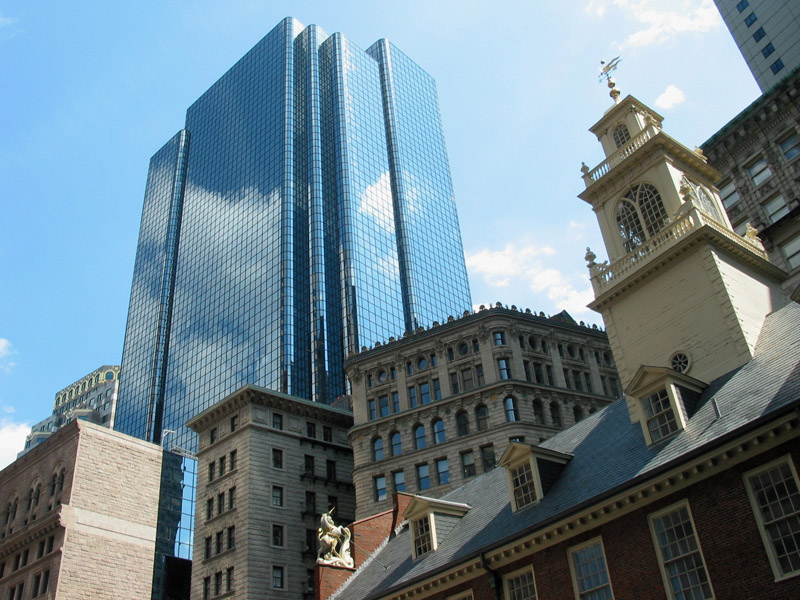
I've been to Boston plenty of times, both for business and just for fun.  It is a great city that is always a pleasure to visit.  Being a New Orleanian at heart, I have a fondness for old American port cities.  Port cities have a special character, and their economic and cultural significance usually means that there's a great deal of historical preservation, often right alongside the high rises and modern architecture of our modern industrial  society.  In this regard, Boston does not disappoint.  I love how the wonderfully preserved stables of the Boston cityscape can appear around a corner almost out of nowhere while at the same time feeling like ever-present landmarks.


We did a little work around Boston last week, and because we were flying out early in the morning we decided to stay at the Logan Airport Hilton on our last night in the area.  A few of us didn't feel like eating at the airport and were having trouble figuring out what to do about it until Mark Ihrie from Sights and Sounds suggested that we head over to the original Cheers on Beacon Hill.  


It immediately struck me that out of all the times I have been to Boston, I had never been to Cheers, neither the Beacon Hill original, nor the Marketplace replica!  So of course I immediately said yes and we grabbed a cab.


I have to say that was a really nice experience.  The bar is cozy with some decent beer on tap and awesome Tiffany lampshades.  Bill also got himself a little Cheers memorabilia, although the magnets that he purchased caused him to accidentally pilfer some cutlery.  You can see in the picture below that unbeknownst to Bill a knife has hitched a ride on his bag.


After dinner the night was young, so we attempted to take the scenic walking route down to the Marketplace Cheers replica.  It was a great stroll for a while, but it was a little too chilly for my southern sensibilities, so we ducked into the Beantown Pub.  It's a cool little pub on Tremont street not far from Boston Commons.  It has a nice vibe, plenty of pool tables, great wait staff, and bartenders that are generous when they mix a drink.  


We ended up hanging out at Beantown until the Bruins game was over, and it started getting a tad too crowded and rowdy.  I don't know much of anything about hockey, but Bill is a big Flyers fan.  He assured me that losing 3-0 is not something that makes one terribly happy, so we got while the getting was good.


All and all it was a great night, and I'll have to remember to check out the Cheers down by Faneuil Hall next time I'm in Boston.  It was a reminder that sometimes it's good to do the touristy stuff, even in your home town.  My wife and I love being home-town tourists during the off season in New Orleans.  Ya'll should also check out the Beantown Pub if you are in Boston.  It is a fun little place.

Crawfish 101: How to Eat Crawfish

Posted by Benson


Last year before the crawfish boil I posted an article about what crawfish are, where they come from, and most importantly how to eat them.  You can find a little video tutorial of the method towards the end of the article here.


I also found this handy diagram in Southern Living:


The method is simple, but it peeling a crawfish quickly and efficiently takes some practice.  If you find yourself having trouble, stick with it for a bit and you'll master the technique in no time.  Of course any of us locals or boil veterans will be happy to help you out too.


Depending on how a crawfish is cooked, the meat can be tender and fragile, or a little more firm.  The stiffness of the shell also has a lot to do with the temperature the crawfish is cooked at.  A properly cooked crawfish should have tender meat and shell that peels right off.  If you find one that's hard to peel, it's better to discard it and start on another one.  Hard to peel crawfish are probably a little overcooked, so you won't be rewarded for your effort.


If you find yourself mangling a bunch of crawfish in a row, and you always seem to be shredding the meat, you're probably being a little too aggressive with your peeling.  You want to catch the segments of the tail with the tip of your thumb and then peel them off with a circular motion, kind of like pulling the plastic ring off of a gallon of milk.  That should keep your fingers away from the tender meat.


We can't wait to see everyone at the boil!  This year should be an even bigger success than last year.  We've also been collecting a stash of gifts and door prizes for our out of town guests, so leave a little room in your suitcase.  I found some great pieces at the Abita Mystery House, so watch out!

Tuesday, February 7, 2012

Crawfish 101

Posted by Benson


For those of ya'll who have never been to a crawfish boil, you're probably curious about exactly what it is.  Before last year's crawfish boil I wrote a post about what a crawfish boil is and described its significance in the culture of south Louisiana.  You can check that out here.


Crawfish boils are important social events within the fabric of southern Louisiana culture.  A crawfish boil is a time for people to come together to appreciate all of the best things in our lives.  It is not just about making food and spending time together.  It is a shared celebration of home and culture.


While crawfish can be found all over the world to one degree or another, the way in which they naturally flourish in the landscape of south Louisiana is somewhat peculiar.  Because of this, in Louisiana, the consumption of freshly boiled crawfish in such large quantities has a very strong relationship to place.  Louisianians produce the vast majority of US crawfish and we actually eat almost all of it ourselves.  Even though Louisiana accounts for more than 90 percent of total US crawfish production, an estimated three quarters of Louisiana crawfish are produced for local consumption!


Nobody eats crawfish like we do in south Louisiana, but the way that we experience crawfish is also self-perpetuating.  Today, most of the crawfish in Louisiana is produced through aquaculture.  The mudbug thrives naturally in the Atchafalya basin, and this tasty crustacean was relished by each successive wave of the basin's human residents.  Even so, the crawfish long had a stigma in modern Louisiana culture.  It was, much like oysters, strongly associated with the diet of Cajuns, and was viewed as a low class food eaten by the rural poor.  But as Louisianians began to appreciate the story of their collective experience, Cajun culture became less and less stigmatized, and the crawfish along with it.


Today, the crawfish has grown into a symbol of Louisiana's cultural roots, and the delicious, jovial excess of a crawfish boil help to connect us with a unique past and allow us to participate in an identity based on recognition of our shared experience.  The Atchafalya basin and the port of New Orleans have always brought together a rich diversity of residents, and acknowledging shared experience has long been a vital part of successfully navigating such a varied social landscape.  The humble crawfish acts as a catalyst for this process because of its democratizing impact.


In southern Louisiana today, everyone eats crawfish.  Crawfish are plentiful, cheap, and make extremely good eating.  The crawfish has grown above social distinctions such as class, race, and gender.  It carries virtually no social stigma to locals and is a food that is accessible to almost anyone.  The consumption of crawfish, especially in the context of a crawfish boil, therefore forges commonality of experience that cuts across lines of difference.


Although the Louisiana style crawfish boil is relatively unique, the purpose it serves is not, nor should it be.  The Atchafalya basin and the port of New Orleans are a microcosm of what defines our country.  The Unites States is defined in many ways by its diversity.  It is a tapestry woven of many different strands, ideally focused on the singular goal of liberty.  Diversity is a source of great strength when otherwise disparate peoples are united in a common purpose, but liberty on its own is an all too nebulous idea.


In his recently published book, Coming Apart: The State of White America, 1960-2010, author Charles Murray argues that what he identifies as an alarming rate of increasing class division is rooted in a lack of common experience between people from different economic backgrounds.  He argues that cultural differences have become so deeply ingrained that in addition to having different views on education, childcare, etc., people from different classes often experience popular culture in radically different ways.  They don't watch the same movies, listen to the same music, or even eat the same type of food.


Recognition of shared experience is vital to the success of our republican experiment.  Common experience helps to breed unity while simultaneously celebrating diversity.  It is how we are able to form and perpetuate a society.  But as Charles Murray has argued, our nation is drifting apart into increasingly insular communities.  In southern Louisiana, the crawfish boil helps to focus our attention on the commonalities of our experiences, rather than the differences.  It reminds us to focus on the ways in which we are connected, and if you take the time to look, you'll find that they are manifold.


Not only are we all heirs to a common history of North American experience, but we are connected by a complex interplay of environment and culture.  We Louisianians may eat three quarters of our crawfish, but they flourish in an alluvial plain formed from a river system that drains more than forty percent of North America.  They are as much a part of the rest of the country as New Orleans is.  And it is in this spirit that we extend to all of our friends the opportunity to come to New Orleans and share some of our experiences.  We invite everyone to spare a moment and think about what we all have in common, regardless of how different we may seem on the surface.

Monday, February 6, 2012

Crawfish Boil: Hotels and RSVPs

Posted by Benson


Wow, the crawfish boil is just a month away!  Things have been moving fast around here lately, and the boil will be here before we know it.  Everyone should have gotten their invitations by now, so if you haven't gotten one and you think you should have, shoot Doug an e-mail.


Although the invitations don't say it, invitees are more than welcome to bring friends and family with them to the boil.  We'll have a a pile of wrist bands at the door for anyone you'd like to bring with you.  I had thought about putting two bands in every invitation, but I think Bill would have killed me.  Even with one band he was giving me dirty looks.


In order to figure out how much crawfish to buy, we'll need to figure out how many people will be at the boil.


If you are planning on coming, Please RSVP.


You can let us know you're coming by sending Doug an e-mail (dgreen@dgjury.com).


If you're planning on coming down for the boil and you haven't already booked your hotel, here are a few suggestions:


First off, the crawfish boil is being held, as always, at Friends Coastal Restaurant in Madisonville LA.


Madisonville is a small historic river town on the north shore of Lake Pontchartrain.  It's about ten minutes from our office in Covington, and about 40 minutes from New Orleans.


Madisonville is a lovely town to visit with a ton of charm and several interesting attractions.  But you can't find any accommodations in Madisonville.  There are a few places that you can try in nearby Covington and Mandeville, although the best places you will find are bed and breakfasts.


In Covington, one of the best B&Bs is Annadele's.  Annadele's is a lovely plantation home near Old Covington.  The grounds are charming and the rooms are rather nice.  My sister had her wedding at Annadele's and my wife and I were impressed with the accommodations.  The restaurant is also usually pretty good, and would be a nice place for breakfast if you stayed there.


Blue Willow Bed and Breakfast is another nice B&B in Covington.  I've never stayed there personally, but it has gotten very good reviews and I've always thought that it looked like a nice place to stay.


Maison Reve Farm is a lovely B&B about twenty minutes north of Madisonville in Folsom.  It is quiet, tasteful, and out of the way while still being close to the boil and New Orleans.


Even though New Orleans is a little farther away than accommodations on the north shore, I highly suggest that boil attendees find accommodations in the city.  Most of the drive to the north shore is taken up by traversing the Causeway Bridge, so it is a very easy drive to make.


If you're looking for something quiet and relaxing, a B&B on the north shore would be perfect, but you'll probably find yourself spending more time on the south shore no matter where you stay.


In New Orleans, I highly recommend the French Quarter for out of town guests.  Staying the the Quarter is a unique experience and puts you right into the action.  Most of the city's tourist attractions are easily accessible from the French Quarter, but you'll find that the quarter tends to be a 'round the clock type of place that remains vibrant at all hours.


The Royal Sonesta Hotel is a good place to stay in the quarter.  It is right on Bourbon Street which is a plus in many ways, although you will find it to be bustling, especially in early March.


Jamie likes the W New Orleans - French Quarter hotel.  She and her husband have stayed there before and recommend it highly.  Its restaurant, Bacco, is good, and the hotel is in a quieter part of the Quarter down on Chartres Street, but still only a couple of blocks from Bourbon.


The Omni on St. Louis is also good place to stay, and a bit more luxurious.  You'll find rooms with a lovely view of the St. Louis Cathedral.


The JW Marriott is on Canal Street, and is very close to the Quarter.  Here you can be within easy walking distance of the Quarter without being surrounded by it.


The Courtyard Marriott is down by the river walk, which is still within walking distance of the French Quarter, although it will take a stroll to get down to Jackson Square.


If you're looking for a more modestly priced hotel, the Country Inn and Suites downtown is a well-rated hotel with modest prices that still isn't terribly far from the French Quarter.  It is on the corner of Magazine and Gravier, meaning that it isn't really in the Quarter, but it is in a decent part of downtown New Orleans between Poydras and Canal Street.

Friday, January 27, 2012

Tuba Skinny Tracks: Billie Holiday

Posted by Benson


Billie Holiday is perhaps the most famous artist whose songs appear on the CD.  In fact, two of the songs on the CD were originally recorded by Billie Holiday: “Your Mother’s Son in Law” and “Farewell to Storyville.”

“Lady Day,” as Billie Holiday was often known, was incredibly famous in her day, and remains an almost mythic figure in the history of Jazz, much like the great Louis Armstrong.  It can also be said that Lady Day’s unique and oft emulated style had a significant impact on the trajectory of jazz in the 40s and 50s, a period in which the careers of many of the other artists we’ve discussed were winding down or even already over. 


Holiday had an amazing improvisational ability that complemented and enhanced the nature of the music.  She credited the inspiration for her style to role models Louis Armstrong and Bessie Smith, and with it she reconstructed many traditional songs.  This was actually a necessity for Holiday, because she lacked formal musical training and her vocal range was little more than an octave.  The unique intonations of her voice and her emotional improvisations to the melody more than made up for what she lacked in her voice.  In this sense, Holiday’s singing was itself a truly jazz style that was always unique and transformative.


Holiday’s career was very long, and she worked her way from jazz quartets to string accompaniment, pop stardom, and eventually event full orchestral backup.  The two Lady Day songs on the CD were recorded by Holiday at two interesting points in her career, and very far away from each other.

“Mothers Son in Law” was recorded by Holiday with Benny Goodman in 1933.  Holiday was 18 at the time and had just been picked up by producer John Hammond.  The record was holiday’s debut recording, and at the time it only sold 300 copies.  However, she had also recorded “Riffin’ the Scotch” at the same time, which was a hit, selling more than 5,000 copies

Mother’s Son in Law

You don't have to have a hanker
To be a broker or a banker
No siree, just simply be
My mother's son-in-law.
Needn't even think of tryin'
To be a mighty social lion
Sipping tea, if you'll be
My mother's son-in-law,
Ain't got the least desire
To set the world on fire
Just wish you'd make it proper
To call my old man papa
You don't have to sing like Bledsoe
You can tell the world I said so
Can't you see you've got to be
My mother's son-in-law.


You don't have to sing like Jessel
You can tell the world I said so
Can't you see, you've got to be
My mother's son-in-law.

“Farewell to Storyville” was first recorded by Holiday 13 years later in 1946.  In the interim, Holiday had grown substantially in popularity.  Her career had recently taken a turn when she had convinced Milt Gabler of Decca Records to allow her to play with a string ensemble.  At the time, strings were associated with the big name acts such as Ella Fitzgerald.  The change marked a step up in the music industry, and it enabled her to present her voice in a different way.


In 1946 Holiday was slated to star in a musical called New Orleans alongside Louis Armstrong.  The film was fraught with difficulties, stemming in part from McCarthyism.  The script writer, Herbert Biberman, was listed as one of the Hollywood Ten and sent to jail, but not before Holiday’s role in the film was reduced to a jazz-singing maid.  “Farewell to Storyville” was one of the numbers written for the film, which explains its New Orleanian subject matter in spite of Holiday’s East Coast roots.  

Farewell to Storyville

All, you old-time queens, from New Orleans, who lived in Storyville
You sang the blues, try to amuse, here's how they pay the bill
The law step-in and call it sin to have a little fun
The police car has made a stop and Storyville is done
Pick out your steamboat, pick yourself a train
- a slo-ow train
Pick out your steamboat, pick yourself a train
- a slo-ow train
They made you close-up they'll never let you back
- won't let you back
Go buy your ticket or else you walk the track


No use complaining, blue sky's folow rain
- the cold-old rain
No use complaining, blue sky's folow rain
- the cold-old rain
Just say farewell now and get your one last thrill
- your one last thrill
Just say farewell now, farewell to Storyville


No use complaining, blue sky's folow rain
- the cold-old rain
Just say farewell now, farewell to Storyville


Just say farewell now and get your one last thrill
- your one last thrill
Just say farewell now, farewell to Storyville

Tuesday, January 24, 2012

Special Guest: Davis "The Real Davis" Rogan!

Posted by Benson


As you know already, Tuba Skinny will be returning to the stage at this year’s 5th Annual DGA Crawfish Boil.  But Tuba Skinny will not be performing alone!

This year the boil will feature a special guest performance by none other than Davis Rogan!


Much like Tuba Skinny, Davis Rogan is a quintessential New Orleans musician, but with a distinctly different flair.  Tuba Skinny connects its audience to the deep roots of traditional New Orleans music by recreating, reliving, and reimagining the sounds and styles that laid the foundation for the blues and jazz traditions that have come to define the city. 


Davis embodies the continual evolution of this rich musical culture and is in many ways an avatar on the bleeding edge of progressive New Orleans music.  He embodies the vibrancy our richly diverse musical heritage; one that has influenced artists around the world for more than a century.  New Orleans has always been, and remains today, a cultural borderland that defies categorization.  The city is a perennial frontier of shared experience; a meeting ground for the exchange of ideas in which meaning is negotiated rather than dictated.


Davis is at home on this frontier.  Like a coureur de bois of old, he is mediator, fluent in the diverse dialects of the New Orleans music scene; welcomed by all and yet truly at home in none.  He blazes his own trails with a mélange of styles that can only truly be described as uniquely New Orleanian.  Critic John Swenson once said that Davis’s “fevered ghjrjhjhjtumind seems to be turning over clever ideas almost faster than he can process them, channeling Brian Wilson, Al Kooper, Steely Dan, NRBQ and the Bonzo Dog Band alongside Fats Domino and Eddie Bo.”

Davis’s fluency with true New Orleans music led the producer of Treme, David Simon, to base the character Davis McAlary on him, which is why Davis is known today as “The Real Davis” as opposed to “The Cable Davis” played by Steve Zahn.


We are truly excited to have “The Real” Davis performing at the crawfish boil this year.  He will be our guide through the turbulent, ever-changing frontier of contemporary New Orleans music, and we could not have hoped for a better one.