Tuesday, July 31, 2018

History of the New Orleans Pelicans

            Louisiana is primarily known for its football. LSU football and the New Orleans Saints are by far the two most popular sports teams in the state. Yet, the state has a long and colorfully history with America’s Pastime—baseball. The LSU baseball program is one of the most prestigious in the country. They have won six national titles, routinely have players drafted by professional teams and succeed in the Major Leagues. New Orleans also currently hosts a Triple-A affiliate of the Miami Marlins—the Baby Cakes—who began their life as the Zephyrs in 1993. Yet the history of baseball in Louisiana goes back much farther than that. One of the oldest and most notable baseball teams in Louisiana was the New Orleans Pelicans, who served as the inspiration for the renaming of the NBA’s New Orleans Hornets in 2013. 

The Pelicans Logo 

            The original Pelicans were founded in 1865 as an amateur sporting association. These types of groups were common in the early days of baseball. In cities across the United States, men interested in playing baseball joined together and created local amateur teams—similar to recreational leagues of today. They would scrimmage against one another or play other local teams. At this point, the rules of baseball were still very much in flux, rules governing strikes and balls, the size of the field, the type of ball all varied from city to city or even team to team. Players came and went from teams. Teams would play one week, dissolve the next, and reform under a few name a few weeks later. Some more talented players earned money by offering their services to the team most willing to pay.  Games took place during the day and on weekends, though Sunday games caused consternation amongst moral and religious reformers who felt that Sunday should be reserved for church, not recreation. 

            In the late 19thcentury, teams across the United States began organizing professional leagues. In 1887, the Pelicans joined the Southern League, one of the country’s growing number of professional leagues, where they played intermittently until 1899. Like any number of the professional leagues that popped up in the 1880s and 1890s, the Southern League suffered from persistent financial problems. Teams entered and left the league on a yearly basis and the league lacked the power to centralize or collect revenue. Seasons began in April and would sometimes end in July or earlier when teams simply ran out of money or quit. In 1888, for example, the Southern League only had four teams. The league dissolved in 1899. 

The 1910 Championship Pelicans 

            The competition and failure of various professional baseball leagues eventually gave way to consolidation. In 1901, the Pelicans joined the newly formed Southern Association, consisting of former teams from the Southern League. With seven permanent members: the Atlanta Crackers, Birmingham Barons, Chattanooga Lookouts, Little Rock Travelers, Memphis Chicks, Nashville Vols, and Pelicans, the Southern Association had a stable foundation. Three other teams: the Knoxville Smokies, the Mobile Bears, or Shreveport Sports rotated through the eighth slot. The Association began its existence as a Class A league—meaning that the players were three levels below the major leagues. The Pelicans played in a variety of parks around the city of New Orleans. From 1901-1908, they played in Athletic Park on the south side of Tulane Avenue near South Carrollton Avenue. In 1909, they moved to Pelican Park just down the street, and then relocated to their permanent home on South Carrollton at the intersection of Tulane Avenue. The park had various names, but remained the home of the Pelicans until 1957. The park was torn down in 1957 and became a hotel, storage units for Xavier University, and is presently the site of a Burger King. 

            The Pelicans featured a number of famous players. In 1910, Shoeless Joe Jackson, of the Black Sox Scandal fame, hit .354, winning the league batting title and leading the Pelicans to the pennant. In their existence, the Pelicans won 17 league titles in the Southern League and Southern Association. Beginning in the 1930s, the Pelicans entered into an agreement with the Cleveland Indians to serve as one of their minor league farm teams. Prior to the formation of farm systems (a process that began in the 1930s, but did not accelerate until the late 40s) major league teams simply purchased the contracts of players from independently owned and operated minor league teams. Thanks to the work of legendary baseball executive Branch Rickey (of Jackie Robinson signing fame), teams entered reciprocal agreements with minor league teams. Major league franchises had the benefit of developing young players and teams like the Pelicans were guaranteed a continuous supply of players. Throughout their history the Pelicans served as a farm club for the Indians, St. Louis Cardinals, Brooklyn Dodgers, Boston Red Sox, Pittsburgh Pirates, and New York Yankees. 

Pelicans Stadium-1921 

            By the 1950s, however, the Southern Association was in trouble. After Jackie Robinson broke the color barrier in minor league baseball in 1946 (the major league barrier would fall in 1947), the major and minor leagues began the slow and contentious process of integration. Teams in the Southern Association, bolstered by the South’s Jim Crow laws, refused to integrate. Only one African-American player, Nat Peoples, ever played in the Southern Association—for two games in 1954. While the Association became a target of Civil Rights activists, it remained segregated until its collapse in 1961. By the late 1950s, the league became financially and geographically unstable. Money problems forced Little Rock to move to Shreveport in 1958. Similar pressures led the Pelicans to move to Little Rock in 1959. Memphis’s stadium burned down in 1960. Facing pressure to integrate, the remaining teams in the Association moved to different integrated leagues and the Southern Association dissolved in 1961.

            While the Pelicans would reappear for a single season in 1977 thanks to a Tulsa oil baron, professional baseball would not return to New Orleans until 1993 and the arrival of the Zephyrs, a Triple-A franchise. 

Tuesday, July 17, 2018

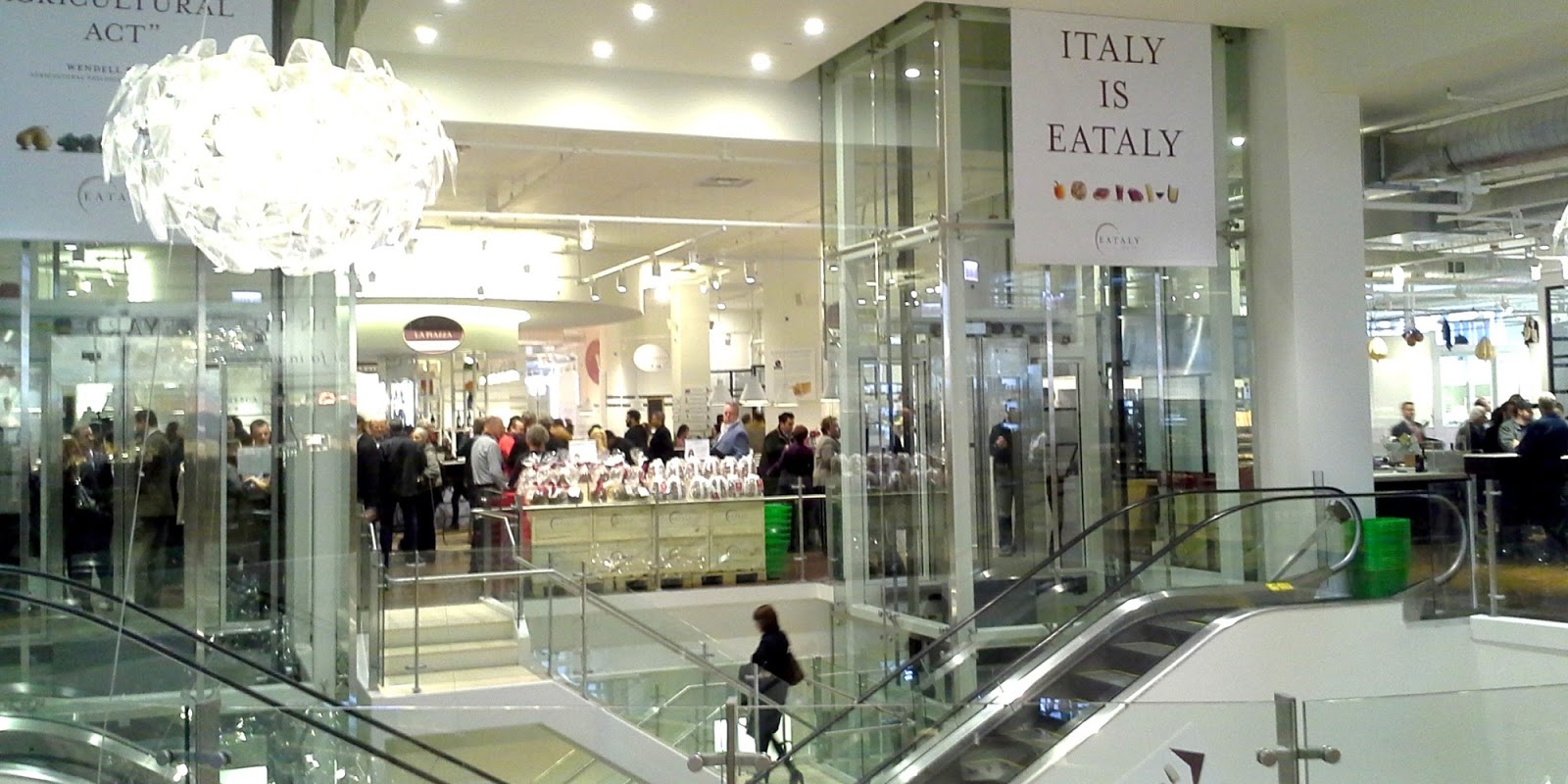
Eataly Chicago

            It’s hard to describe Eataly in a few words. The Chicago location, at 43 E. Ohio Street, features a retail area that includes imported pastas, olive oils, balsamic vinegars, Italian sodas, chocolates, and a host of other grocery items. There’s a wine store, beer section, a meat store, a mozzarella bar, a bakery, seafood, and produce sections. There’s dessert stands that sell homemade cannoli and gelato. There’s even Italian beauty products. This cornucopia of Italian products opened in December 2013. Eataly has 63,000 feet of retail space. It is the second-largest Eataly in the United States. There are other locations in New York, Boston, and Los Angeles. 

The interior of Eataly 

            And there’s one more thing that we haven’t mentioned yet: the restaurants and food counters. Eataly Chicago has four restaurants. Sabia—an Italian seaside inspired restaurant. La Pizza and Pasta—featuring homemade pastas and Neapolitan style pizzas. Osteria di Eataly—a traditional Italian restaurant serving full Italian meals of antipasti, primi, secondi, and dolci. Birreria—Eataly’s microbrewery and beer themed restaurant. They brew the beer about 20 feet away from the restaurant. The food counters include Pronto—a grab and go panini and salad bar. Ravioli & Co.—a pasta bar. A focaccia bar and La Rosticceria—a roasted meat counter serving paninis and plates. 

            Eataly is the brainchild of Oscar Farinetti, an Italian businessman who founded the consumer electronics chain UniEuro. After selling UniEuro in 2003, he created Italy. The New York Times described Eataly as a megastore that “combines elements of a bustling European open market, a Whole-Foods-style supermarket, a high-end food court and a New Age learning center.” The first Eataly opened in 2007 in Turin, Italy in a converted vermouth factory. The first American Eataly opened in New York near Madison Square Park in 2010. It is over 50,000 square feet in size. The American Eataly locations are owned in partnership with Italian restauranteurs Lidia and Joe Bastianich (of Masterchef fame). In addition to the five American locations, Eataly has opened stores across Italy and in places like Tokyo, Moscow, Istanbul, and Sao Paulo.  

Eataly desserts 

            While we were in Chicago, we had the opportunity to eat and shop at Eataly. We loaded up on imported olive oils, balsamic vinegars, and imported dry pastas. We also bought a small—LARGE—number of pastries and cannoli. We also had the chance to eat at two of Eataly’s restaurants: La Rosticceria and La Pizza & Pasta. In the best traditions of Italian cuisine, the cooking was straightforward and allowed the fresh local ingredients to shine. 

Capricciosa pizza 

 La Rosticceria: We enjoyed sandwiches from La Rosticceria. The first was a thinly slice porcini-rubbed prime rib. The meat, nestled in a homemade baguette, is melt in your mouth tender. The other was a roasted and braised pork shoulder served with salsa verde. The shoulder had a rich pork flavor and soft, succulent texture. 

La Pizza & Pasta: Our meal at La Pizza & Pasta started off with a selection of mozzarella from the mozzarella bar and Pane al Forno—a focaccia style bread—with two types of prosciutto and speck. The focaccia style bread was heavenly little pieces of pizza dough crisped up in the pizza oven. The mozzarella was bright and fresh. In Neapolitan style, the capricciosa pizza with buffalo mozzarella, mushrooms, prosciutto, artichokes, and olives had a blackened and crisp outer crunch that became softer towards the middle. The remarkably fresh ingredients were the star of this dish. 

So if you’re ever in Chicago, Boston, Los Angeles, or New York and you want an immersive introduction to Italian food and cuisine, stop at Eataly. You may enter hungry, but you won’t leave that way. 

Tuesday, July 10, 2018

Chicago Dining Options


            Let’s continue our trip through Chicago by highlighting some of Chicago’s best restaurants. 

Stan’s/Do-Rite Donuts: These two Chicago doughnut shops are at the forefront of the gourmet doughnut craze. Stan’s features a range of doughnuts from the traditional to the unusual. There’s regular old glazed, chocolate old fashioned, fritters, and also there’s lemon curd and glazed pretzel.  Do-Rite has a wide array of new flavors like Candied Maple Bacon, Cinnamon Crunch, and Pistachio-Meyer Lemon. These doughnuts pack quite the punch so either bring a friend (or two) or only order one or two at a time. 

Fish at Frontera 

Frontera/Xoco: While pursuing a PhD in anthropological linguistics, Rick Bayless and his wife, Deann, lived in Mexico for six years, studying regional Mexican cookery.In 1987, Bayless opened Frontera Grill in Chicago. Bayless introduced regional Mexican cuisine to an American restaurant market flooded with Tex-Mex, quesadillas, and fajitas. By treating Mexican cuisine with the same attention to detail and technique found in French cuisine, Bayless offered a different view Mexican food in America above the homogenized “Mexican” food found across the country. Frontera and its sibling take-out spot Xoco, use local, fresh ingredients to highlight Mexican flavors. 

Purple Pig: Opened by fourth generation restauranteur, Jimmy Bannos in 2009, the Purple Pig’s menu includes small-plate preparations of pig, cheeses, vegetables, and a standout wine list that highlights the flavors of Italy, Greece, and Spain. Bannos began his culinary career bussing tables at his father’s restaurant in Chicago. After culinary school, Bannos worked for Emeril Lagasse in New Orleans and Mario Batali in New York. In 2015, Bannos won the James Beard Award for Rising Star Chef. The Purple Pig doesn’t take reservations and is located in the heart of the Magnificent Mile, so there may be a wait. 

Lamb ravioli at Monteverde 

 Monteverde: Opened in November 2015, Monteverde is the creation of chef Sarah Grueneberg. After culinary school, Grueneberg worked at Brennan’s in Houston before moving to Chicago to train in Italian cooking under Tony Mantuano at Spiaggia. She began as a line cook before working her way up to executive chef in 2010. During a trip to Italy, Grueneberg studied pasta making and her pastas are the star of Monteverde’s menu. The ravioli filled with braised lamb, ricotta, garlic, artichokes, olive, and mint is a particular standout. In 2017, Grueneberg won the James Beard Award for Best Chef: Great Lakes. The restaurant also appeared on Eater’s 2017 “America’s 38 Essential Restaurants.”

Ramen-san: Part of the Lettuce Entertain You restaurant group, Ramen-san features traditional tonkotsu broth—a broth made from pork bones—to accompany its ramen. The broth is first part of the five key components of Ramen-san ramen. There are also shio (chicken broth) and roasted veggie miso broth options. Seasonings include soy sauces, kimchi, and white miso. Next are the specially made ramen noodles. Then there’s the choice of chashu pork (pork belly), fried chicken, and beef shoulder. Finally, you can top your ramen with a soft-boiled egg and a variety of pepper blends. The menu also features a number of steamed buns, dumplings and chicken wings. 

Sushi-san sushi 

A Japanese Old-Fashioned 

Sushi-san: Sushi-san is Ramen-san’s sushi cousin. The menu features a variety of fresh maki rolls, nigiri, tempura, and fried rice dishes. We indulged in a clever play on fish tacos made from fried nori. The nigiri highlighted the fresh fish. The maki were a mix of old-school maki (tuna, Hamachi) and new school (tempura shrimp with gochujang and spicy tuna with tobanjan). The service at Sushi-san is especially attentive. The cocktails are inventive and playful. The crowd is young, professional, and a bit loud, so be prepared. 

Epic Burger: A small Chicago based burger chain, Epic burger follows the model of Smashburger and Shake Shack by favoring thinner griddle-cooked patties. There are burgers, French fries, and an array of toppings. The menu is small, but well-executed.. The small chain also promotes environmental consciousness. All of the ingredients for the burgers and toppings are locally sourced. The ingredients are never frozen or shot full of artificial colorings, steroids, or other additives. 

Tuesday, July 3, 2018

Chicago Entertainment Options

            Welcome back to our tour through Chicago. Last week we looked at some cultural landmarks in Chicago. This week we’ll focus on some entertainment options.  

Wrigley Field 

Wrigley Field: Opened in 1914, Wrigley Field has housed the Chicago Cubs since 1916. Nestled in the Wrigleyville neighborhood on the North Side of Chicago, Wrigley is in the middle of a residential area. There are no obnoxious parking lots and the other amenities that make so many modern stadiums joyless deserts. Wrigley features its famous Ivy covered outfield walls and hand turned scoreboard. The stadium retains much of the charm of the old ballpark while offering modern amenities. The Cubs were the last team to install lights for night games. At present, they still play many of their home games during the day. In 2016, the Chicago Cubs won the World Series for the time since 1908, ending a championship draught longer than that of the Boston Red Sox. 

Guaranteed Rate Field: While not as famous or successful as the Cubs, the Chicago White Sox are the Second City’s second major league baseball team. Playing in Guaranteed Rate Field on Chicago’s South Side, good seats are cheap and plentiful. While lacking the charm and history of Wrigley, Guaranteed Rate Field has easy access to public transit. Guaranteed Rate lacks the neighborhood feel of Wrigley and the crowd can be a bit rougher—we witnessed a lot of drinking, smoking, and cursing fans—but the stadium is worth a visit. Even if it is just to take advantage of some cheap seats. 

Guaranteed Rate Field 

Second City Chicago: Besides being known for the Cubs, hot dogs, those guys from SNL, and the Blues Brothers, Chicago is famous for improv. Second City is the city’s premier improv troupe. Throughout the years, Second City has nutured the comedy talents of Billy Murray, Dan Aykroyd, Tina Fey, Amy Poehler, Steve Carrell, Stephen Colbert and many, many others. Second City offers two recurring comedy shows, one on the main stage and the other in a secondary theater. They also have improv classes, stand-up comedians, comedy workshops, and a host of other activities. The recurring shows feature Second City’s famous “Third Act” where the performers engage in improv based on audience suggestions. They even had table-side service where you can a beer to go along with the show. 

Chicago Architecture Foundation Tour: Okay, this is a little bit of a cheat. The Chicago Architecture Foundation actually has 7 tours: River Cruise, Must-See Chicago, Historic Treasures, Elevated Architecture, Art Deco Skyline, Bus, and Chicago Modern. We recommend the River Cruise. Starting out on the Chicago River, the boat tour lasts 90 minutes. The trained docents tell the history of the city through its architecture. There’s discussions of the 1871 Fire, the Great Depression, the evolution of Art Deco to Modernist styles, the rise and fall of Chicago’s big businesses, and the city’s requirement that the public must have access to the entire length of the river. Find a seat on the top deck and bring a coat. 

The stage for Hamilton 

Broadway in Chicago: Chicago has a number of theaters that host touring and permanent productions of Broadway musicals. This year, Broadway in Chicago will feature The Book of Mormon, Fiddler on the Roof, Kinky Boots, Dear Evan Hansen, Hello Dolly, and Charlie and Chocolate Factory. Chicago’s CDIC Theater is also the permanent home of a production of Lin-Manuel Miranda’s Hamilton, the smash musical. While not cheap, Chicago’s Hamilton has tickets more tickets available than at the musical’s home at New York’s Richard Rogers Theater or for any of the touring productions. The cast is similarly impressive, stocked with Broadway veterans. Chicago will also soon be the host of a new historical exhibition based on the musical. 

            Next week we’ll take a look at some of Chicago’s best dining options. 

Tuesday, June 26, 2018

Chicago Cultural Attractions

           Chicago is the third biggest city in the United States. As luck would have it, we recently spent quite a bit of time there. As a result, we were able to take in some of the best—restaurants, events, and attractions—that the Second City has to offer. For example, we learned that the phrase “Second City” does not mean that Chicago is inferior to New York. Rather it is the name that the city adopted following the Great Chicago Fire of 1871 that destroyed much of the city. A new, “Second City” arose from the ashes. 

            Like all the of major cities of the United States, Chicago arose due to its proximity to water. Located on the shore of Lake Michigan and a short distance from the Mississippi River watershed, Chicago served as a crucial function in the early 19thcentury of linking the disparate regions of the United States together. In the late 19thcentury, the nation’s booming railroad industry caused Chicago to rise to even greater prominence. The Second City served as a crucial link for east-west and north-south railroad lines.  Chicago soon became a leading center for art, education, food, and commerce.  With all this in mind, let’s start with some of Chicago’s biggest cultural attractions.  

Sunday Afternoon on the Isle of La Grande Jatte 

Art Institute of Chicago: The Art Institute is one of the oldest and largest art museums in the United States. It hosts over 1.5 million visitors annually. The Art Institute has over 300,000 works of art in its collection. The collection includes exhibits in African, Indian, Ancient and Byzantine, European, and Modern and Contemporary Art. It has particularly strong collections of Impressionists and modern American art. Some of the standouts include Georges Seurat’s A Sunday Afternoon on the Isle of La Grande Jatte, Pablo Picasso’s The Old Guitarist, Edward Hopper’s Nighthawks, and Grant Wood’s American Gothic. 

Field Museum: Sue the T-Rex is the star attraction of the Field Museum. Sue is the best-preserved and most complete T-Rex fossil ever found. Sue is 40 feet long and 67 million years old. The Museum’s permanent exhibitions include the Animal Halls that feature a variety of mammals from Asia and Africa including the infamous man-eating Lions of Tsavo.  The Evolving Planet exhibit examines the evolution of life on Earth over our 4 billion year history. The Museum also has an exhibit on life in Ancient Egypt complete with 23 human mummies, mummified animals, and a three story replica tomb. 

Adler Planetarium 

Adler Planetarium: Located right next to the Field Museum, the Adler sits on the shore of Lake Michigan. The Adler features the Doane Observatory with its 20 inch diameter aperture telescope that gathers 500 times more light than the human eye. This allows visitors to view objects like the Moon, planets, stars, and distant galaxies that are light years away with remarkable clarity. The Planetarium also hosts an exhibit detailing mankind’s exploration of Mars with a replica Martian rover. 

Shedd Aquarium: Located right near the Field and Adler, the Shedd Aquarium is one of the largest aquariums in the United States. It houses over 1,500 species and 32,000 animals. It is the most visited aquarium in the United States and the most popular tourist attraction in Chicago. The Caribbean Reef exhibit is home to a rescued green sea turtle named Nickel. Nickel was struck by the propellers of a motorboat in 1998 that left her paralyzed from the waist down. As a result, her backside sticks up when she swims. She earned her name after an x-ray revealed a 1975 nickel lodged in her throat. She is one of many rescued animals to find a new life at the Shedd. 

Apollo 8 

Museum of Science and Industry: Located in the Hyde Park neighborhood, near the University of Chicago, the Museum of Science and Industry opened in 1933 in the building that hosted the 1893 World Fair. Over the years, the museum’s holdings have grown significantly. It currently houses a full-size replica coal mine, a large model railroad, the command module of Apollo 8 (the first Apollo spacecraft to orbit the moon), and German U-Boat 505, captured during World War 2. 

Lincoln Park Zoo:  Founded in 1868, the Lincoln Park Zoo is one of the oldest zoos in the United States. It is one of the few zoos in the United States that does not charge admission. The zoo houses over 1,100 animals including polar bears, penguins, gorillas, reptiles, and monkeys. The Zoo is currently constructing a new penguin and polar bear exhibit that will allow the polar bears to roam more freely. The Zoo also houses an extensive collection of African apes in an expansive habitat. The Kolver Lion House contains a number of rare African lions, leopards, linx, and pumas. 


Next week, we’ll be back to look at some entertainment options in Chicago. 

Tuesday, June 19, 2018

DGA Dining: Compere Lapin

In June 2015, chef Nina Compton opened Compére Lapin on Tchoupitoulas Street in New Orleans’ Central Business District.  In May 2013, Compton had competed on Top Chef: New Orleans eventually finishing as runner-up and fan favorite. A native of the Caribbean island of St. Lucia where her father served as prime minister, Compton had worked in French and Italian kitchens before heading to Top Chef. On the show, Compton dazzled the judges with her handmade pastas and ability to balance complex flavors. This ability to blend French, Italian, and Caribbean traditions carries over to the menu at Compére Lapin (“Brother Rabbit” named after Brer Rabbit of folklore). 

Nina Compton 

Since the restaurant’s opening, Compton has a received a slew of recognition and awards. In 2016, New Orleans restaurant critic Brett Anderson named Compére Lapin, the New Orleans Restaurant of the Year.  Anderson explained that the biggest triumph of the restaurant was that Compton and her husband-partner, Larry Miller, “could have leveraged her television success on "Top Chef'' with a publicity stunt disguised as a restaurant and probably made some easy money — but didn't.” Instead they created a restaurant that “clearly means something to them and that has grown stronger with each passing month since its mid-2015 opening.”  In an earlier review, Anderson had awarded Compére Lapin four beans—the Times-Picayune’s highest rating.  The appeal of the restaurant, Anderson argued, was that “Every meal at the restaurant over the past six months has brought a creation that, at the time of its consumption, has had the effect of overshadowing something extraordinary that came before.”  

Compton and Compére Lapin have received plenty of national press as well. Food & Wine Magazine named Compton one of the Best New Chefs of 2017. In 2018, Compton won the James Beard Award for Best Chef: South. In 2017, Eater critic Bill Addison placed Compére Lapin on its list of 38 Essential Restaurants in America. 

Recently, we had the pleasure of eating at Compére Lapin, so let’s take a walk through some of the dishes we enjoyed. 


The meal began with chive-buttermilk biscuits, served with a honey butter and a bacon butter. This oven-fresh pockets of deliciousness were a strong start to the meal. 


The dirty rice arancini were a wonderful blending of New Orleans and Italian traditions. 


The broiled shrimp were a play on the classic New Orleans barbecued shrimp, but with a chili butter straight from the Caribbean. 


A tuna tartare served with crispy banana chips is a play on textures with the right amount of heat. All of Compton’s food is wonderfully balanced—each dish has just enough spice, leaving a little burn in the back of the throat. 


The curried goat is the absolute star of the meal.  Tenderly braised goat served with heavenly sweet potato gnocchi and cashews. This dish epitomizes Compton’s style blending New Orleans, Italy, and the Caribbean in a mouthwatering combination. It’s the type of food that creates lasting food memories and a desire to revisit them again and again.  

Tuesday, May 22, 2018

History of the Beignet

            New Orleans is known for its food. There’s gumbo, jambalaya, po’boys, red beans and rice, crawfish etouffee. There’s king cake and bread pudding for dessert. But there’s nothing quite like beignets. No trip to the Crescent City is complete without a visit to Café du Monde. There’s something wonderful about those flaky doughnuts doused in powdered sugar. If you walk out without any powdered sugar on you, you’ve done beignets wrong. In honor of this quintessential New Orleans dessert, breakfast food, snack, and all-around delicious foodstuff, let’s take a look at the history of the noble beignet. 

Cafe du Monde beignets 

            Unsurprisingly, beignets are French in origin. The word beignet means bump. Beignets are pastries made from a deep fried choux pastry. A choux pastry is a light pastry dough made from butter, water, flour, and eggs. Unlike other doughs, it does not have a raising agent like yeast. Instead choux pastry relies on large amounts of moisture (from the water and butter) to create steam that causes the pastry to rise during baking. Choux pastry doughs are used to make a variety of pastries including churros, profiteroles, eclairs, and French crullers. 

            According to Harold McGee, author of On Cooking, choux pastry dough emerged during the Middle Ages in France. Although the history of frying dough stretches back much farther than that. Historical records from Ancient Greece note that Ancient Greeks were frying foods in olive oil in the 5thcentury B.C. Beignets arrived in New Orleans in the 18thcentury with the arrival of the French colonists. The Acadians, exiled from Nova Scotia in the 1760s, also brought the tradition of beignets with them. They became an important part of Creole cuisine and began to incorporate local ingredients like bananas and plantains. Today across the city you can find beignets on dessert menus with a variety of fillings. The State of Louisiana declared the beignet the official state doughnut in 1986. 


            Café du Monde is the most popular spot for beignets in New Orleans. The famed location in the French Quarter sits on Decatur Street right near Jackson Square. It is open 24 hours a day and only serves beignets—three per order—and a number of drink options. The most popular pairing with beignets is café au lait—coffee with milk. The difference is New Orleans café au lait has hot milk added as opposed to white coffee, which has cold milk. New Orleans café au lait also includes chicory—added during the Civil War as a result of a coffee shortage. The chicory adds a chocolate-like flavor. In recent times, Café du Monde only closed as a result of Hurricane Katrina. On August 27, 2005, the restaurant closed and did not reopen until October 19, 2005 after taking the opportunity to refurbish the famed spot’s interior. 

            If you can’t make it to New Orleans to try beignets yourself, the good news is that Café du Monde sells its beignet mix online. Just add water to the mix and heat up some oil for frying and you can enjoy this New Orleans staple anywhere in the world.