Tuesday, August 19, 2014

High Water Friends CD - Track One: The New Ninth Ward

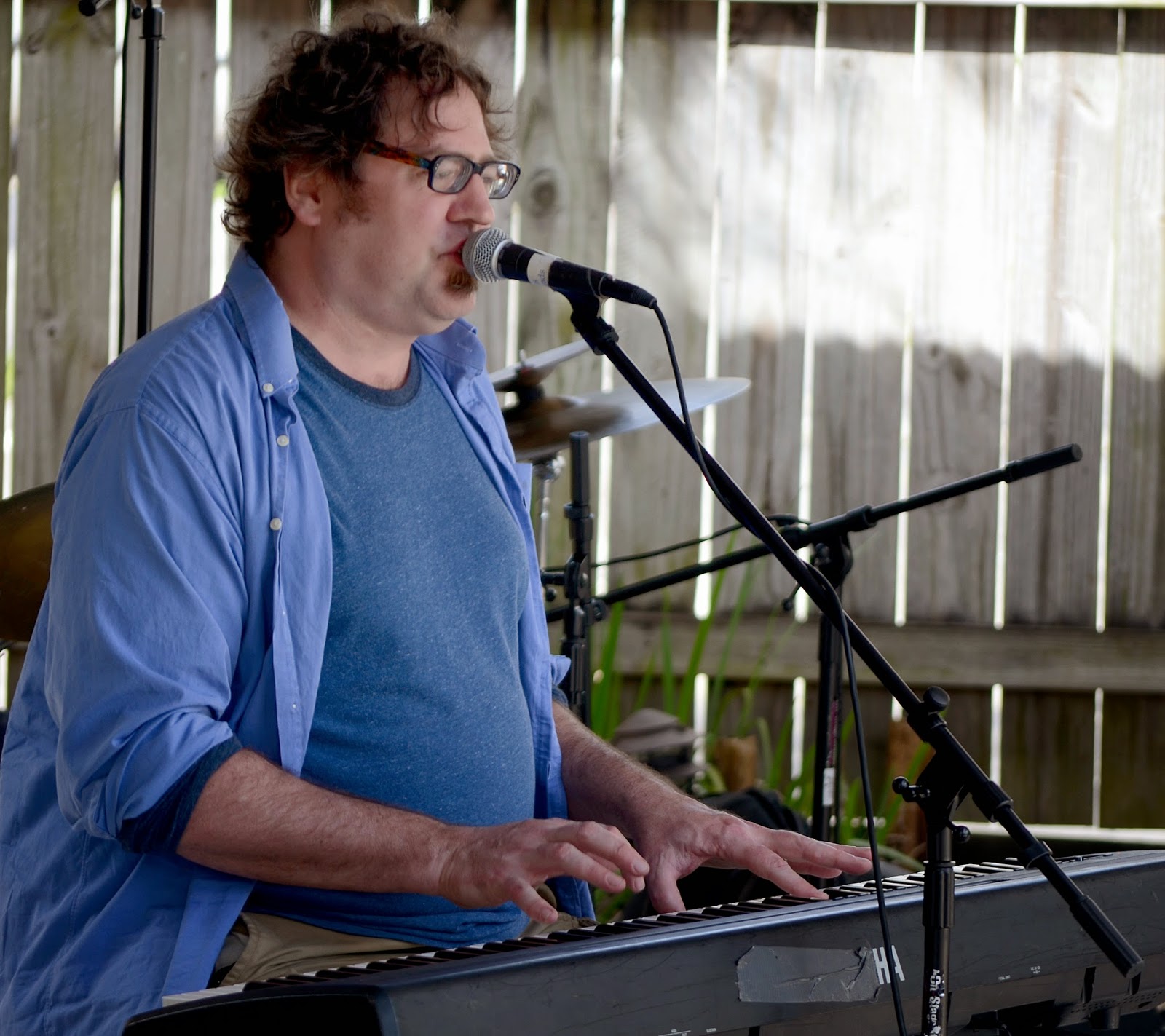
          Way back in 2011 when this blog began, one of the first features was about the crawfish boil and its accompanying CD. Well, we’ve decided to revive this idea for the upcoming release of the CD of the 6th Annual DGA Crawfish Boil. This CD, titled High Water Friends, features songs from boil staple Davis Rogan and Warren Prejean and the Zydeco Rhythm and Blues Band. For more information about that crawfish boil, revisit our posts, here and here. As we did in the past, we’ll handle each song a post at a time, beginning with Davis Rogan’s The New Ninth Ward.

The Ninth Ward After Katrina 
When Hurricane Katrina hit New Orleans in 2005, the Ninth Ward absorbed some of the worst damage the storm had to offer. The storm surge overwhelmed the levees in multiple places, leaving the entire ward and most of the city under water. The water not only destroyed many homes, but swept them right off their foundations. The surge was so powerful that a two hundred foot barge tied up along the Industrial Canal broke free from its moorings. It eventually settled on top of several destroyed homes (a Federal Judge later ruled that the company was not responsible for any barge-related damage). Meanwhile, around Louisiana and the world images of destruction from the Ninth Ward revealed the horrifying extent of the damage.

barge.jpg
The Barge in the Ninth Ward. Times-Picayune

Recovery has come slowly to the Lower Ninth. As state and federal officials bungled the initial recovery efforts, the residents of the Ninth Ward, mostly poor and African American remained homeless. Without the resources to return home, the population scattered across the United States. Reconstruction proceeded at a snail’s pace.  FEMA restricted access to the area for nearly a year after the storm. Residents of the Ward and outside charities, like Brad Pitt’s Make it Right Foundation, have rebuilt some parts of the Ninth, but other areas remain desolate. The population has shrunk from 14,000 before the storm to only 3,000 according to the latest census. Ineffective management, the slow recovery, and the impoverished nature of the residents led many in the aftermath of the storm to question the usefulness of reconstructing the Ninth at all. These views, propagated by incompetent government officials and other white non-residents of the Ninth Ward, carried a strong racial connotation—white businessmen and politicians denying help and homes to poor African Americans.

Times-Picayune Graphic of the Storm Damage 
Davis Rogan’s The New Ninth Ward savagely satirizes this mentality. He first targets his ire at leading members of the Bush administration, especially FEMA director Michael Brown—best known for heading the International Arabian Horse Association. Rogan lampoons the idea that New Orleans’s social and political issues can be solved by traffic cameras and schools. The paternalism of outsiders who sought to remake New Orleans into a cleaner and therefore better city also warrants scorn: “And every day we pray they would do less misbehavin’/ So they’d deserve all this saving.” As if the behavior of New Orleanians should have any impact on helping them have places to live. Finally, Rogan identifies the true desire of those seeking to transform the city into something respectable. By locking up criminals, planting vegetable gardens, and rebuilding the ward, Rogan argues that “This time around we’re making it white.” Rogan’s lyrics and music cut to the core of the issue, lambasting the idea that gentrification will solve all of New Orleans’s problems.


The New Ninth Ward

I’ll meet you on Dick Cheney Street, at Rumsfeld Boulevard
Right next to the statue of Michael Brown
In the new ninth ward
Folks are living so easy there, times used to be so hard
Chicken in every pot, oh, and they dance a lot         
In the new ninth ward
The new ninth ward
The new ninth ward
The new ninth ward
Times are easy there, they used to be so hard
      
Well we kicked out all the criminals
Got rid of the blight
Put a little camera on the traffic light
The kids they come to school, they come to learn and not fight
This time around we’re making it right

In the new ninth ward
The new ninth ward
The new ninth ward
The new ninth ward

These lovely little musicians, got them a place to stay
Even set them up a concert hall so they have a place to play
New construction, state of the art, nothing could be finer
All the modern conveniences and the best dry wall from China
In the new ninth ward
The new ninth ward
The new ninth ward
The new ninth ward
Times are easy there, they used to be so hard

Musicians in one area, yeah that’s what’s up
In one place just in case we need to round them up
We think it’s best to know where they all stay at night
This time around we’re making it right
In the new ninth ward
The new ninth ward
The new ninth ward
The new ninth ward

SOLO

Yeah, the new ninth ward
The new ninth ward
The new ninth ward
The new ninth ward
Times are easy there, they used to be so hard
We’re taking up the burden, we are the ones
Who came to save New Orleans from New Orlenians
And every day we pray they would do less misbehavin’
So they’d deserve all this saving

Sister Bessie used to drink a lot, on her porch all day
Now we set her up a vegetable plot, ain’t that some productivity
And Brother John he’s got that ice cream truck
Such an enterprising little fellah, selling cones in the working zones
Where he moves a lot of vanilla
In the new ninth ward
The new ninth ward
The new ninth ward
The new ninth ward
Times are easy there, they used to be so hard

Well we kicked out all the criminals
Got rid of the blight
It works a little better now we made it uptight
And best of all it’s safe to walk the streets at night

This time around we’re making it white

Friday, August 8, 2014

New Crawfish Boil CD!

Posted by Doug


Whew!  It’s been busy ya’ll!  Our clients have been throwing work at us at a pretty brisk pace and that has diverted our attention from more interesting pursuits like posting blog content and sending these emails that at least a few of you read.  But, a couple of things have happened recently that merit my personally drafting an email to our friends.  So, what’s the haps?

Well, we finally completed production of the CD from the 6th Annual DGA Family and Friends Crawfish Boil and it will be arriving in your snail mail box soon.  If you don’t get it, please let me know.  Now, this is the CD from 2013, not the boil we just had in March of this year – that’s how far behind we are.  But this one was worth the wait.  The title is High Water Friends, which derives from the fact that our traditional venue, Friends Coastal Restaurant, became a little less “coastal” and a little more “off shore” when a hurricane blew through in 2012.  Friends is no more, literally, although we expect it to rise again in more elegant form someday. 

A high water friend is someone who picks you in their pirogue when the water rises and takes you to dry land, so we celebrated the boil last year at an alternative location – a barge on the Tchefuncte River.  The food was good as always and the music was great.  The weather was not so good and the venue was a little dreary.  But, in The Big Easy the party never ends.  On the CD you will find a track by David Rogan entitled “Hurricane” that explains it all.


Speaking of my good friend Davis Rogan, he has a KICKSTARTER campaign up right now that I would like to encourage all of you to consider sponsoring.  Davis has become the house band for the DGA crawfish boil and always hangs around after his set, sucking (crawfish) heads, telling lies and drinking whiskey.  Believe me when I tell you it’s worth the trip to the crawfish boil just to meet Davis. 


Davis is a New Orleans native and has been playing music locally and worldwide for over twenty years.  Would you believe he was once artist in residence in the Loire valley in France?  It’s true!  Since 2001, he’s been performing under the band name DAVIS.  From 2006 to 2013, Davis worked with David Simon on the HBO series Treme.  The lead character, Davis McAlary (Steve Zahn), better known as DJ Davis, was based pretty much entirely on Davis Rogan.  What most people don’t know is that all of the songs DJ Davis performed on Treme were written by Davis Rogan and performed by his band, with Steve Zahn murdering the lyrics.  As Davis put it to me, “my songs are my children and Steve Zahn is a child molester.”  Davis is raising money to produce his 6th record and I know you are going to want one.  I will be an Executive Producer on the record and you, too, can help.  If you sponsor his KICKSTARTER you can get the full version of all of the Treme songs DJ Davis performed in Treme!  And, of course, there is a lot more bling you can get for the right price.  So come on and pull a $20 out of your wallet. The KICKSTARTER ends soon, so act NOW


The other really important news about the crawfish boil CD is a bit sad.  Most of the songs on the CD were performed by Warren Prejean and the Zydeco Rhythm and Blues Band.  The set starts with an amazing cover of the famous B.B. King hit, The Thrill is Gone with electric guitar riffs you won’t believe happened on a barge down by the river.  It goes on to a funky version of Money (That’s What I Want) that will make you smile and ends with a Warren Prejean original, Somebody Told Me.  It was a great performance and you will really enjoy it, but the sad news is that Warren Prejean died several months after the boil.  The CD is dedicated to his memory and I promise the last track will bring tears to your eyes at the loss of a great musician and a better person.

Monday, June 30, 2014

Warren Prejean (1948-2013)

          Only a few months after playing at the DGA crawfish boil in March 2013, legendary zydeco musician Warren Prejean died on August 3, 2013 at the age of 64. Prejean, a retired truck driver, devoted much of his life to playing and promoting zydeco.

Warren Prejean on the rub board 
          Zydeco fused Cajun music with blues and R&B. Cajun music itself is a union of French, Irish, Celtic, German, Latin, and Appalachian styles. When mixed together, zydeco represents a truly American musical form. The word zydeco itself allegedly originates from a phrase spoken in the regional French, "leh-zy-dee-co sohn pah salay...") meaning roughly "the snap beans aren't salty". This phrase has been referred to as meaning "I'm so poor, I can't afford any salt meat for the beans." Zydeco music relies on a special instrument, known as a vest frottoir (or rub board). The frottoir is a percussion instrument, generally made out of pressed, corrugated stainless steel and is worn over the shoulders. A musician then drags a metal tool (or spoon or something similar) up and down the rub board to make music. Zydeco, like other native Louisiana traditions, takes the best parts of a myriad of cultures and creates something unique.

       Here is Prejean with his band at the 2012 meeting of the American Society of Trial Consultants in New Orleans. 


          In recent years, Prejean played with the Creole Zydeco Farmers. Based in Lafayette, Louisiana and founded in 1989, the band derived its name from its style of music and the agricultural history of Lafayette parish. All of the band’s members, including Warren Prejean, have familial ties to the region. Prejean provided vocals and played the accordion. Prejean performed with the band across Canada and the United States. The Creole Zydeco Farmers have also toured in Europe with performances in Greece, Austria, Belgium, France, Germany, Italy, Switzerland, Luxembourg, and Holland. They are also a regular performer at New Orleans Jazz Fest.

          RIP Warren Prejean. 

Friday, June 27, 2014

Benny Turner and the Real Blues Featuring Sam Joyner

The blues might be the most important of all the musical styles that originated in America. The blues fused spirituals, call and response chants, and traditional ballads. This distinctly American musical style emerged from African-American communities in the Deep South following the legal abolition of slavery in 1865. The post-emancipation period allowed African-Americans to form communities, churches, and other voluntary associations free from white inference. These separate institutions allowed African-Americans to cultivate and expand upon their previous musical traditions. The blues arose from these newly independent African-American communities.

Benny and his band 
Over the ensuing decades, the blues would influence and help new musical forms like jazz, R&B, and rock and roll. While we may be able to easily explain the origins of the blues and its legacy, defining the blues proves much more elusive. Blues singer Alberta Hunter once tried to explain the blues this way, “Blues means what milk does to a baby. Blues is what the spirit is to the minister. We sing the blues because our hearts have been hurt, our souls have been disturbed.” British blues artist Alexis Kormer said of the blues, “I guess music, particularly the blues, is the only form of schizophrenia that has organised itself into being both legal and beneficial to society.”
Benny Turner plays the bass over his head 
For the first time, the DGA crawfish boil featured a blues band: Benny Turner and the Real Blues Featuring Sam Joyner. Benny Turner is a veteran of the New Orleans, Chicago, and Texas blues scenes. His connections to the history of the blues in America run deep. His brother was legendary blues artist and Rock and Roll Hall of Famer, Freddie King. Freddie King, along with B.B. and Albert King, were the three “Kings of the Blues guitar” in America. Benny Turner released his own CD honoring his brother’s contribution to American blues music. Over his career, Turner also collaborated or performed with blues legends like Mighty Joe Young, Memphis Slim, Gladys Knight, and Otis Clay. In New Orleans, he worked as the band leader for legendary blues singer Marva Wright. In recent years, Turner formed his own band, The Real Blues.
Benny Turner playing in the crowd 
Turner, a bass player, dazzled the crowd by playing while mingling and sitting amongst the appreciative crowd. Turner introduced the crowd at the crawfish boil to a legendary American musical form and it was pleasure to have him perform. 

Tuesday, June 24, 2014

NOLA Summer Snowball Tour 2014: Chubba's

          Now that the temperatures in the Greater New Orleans area have settled into the 90s with nearly 100% humidity, it’s time for the return of that NOLA summer staple: the snowball. Before I get into my latest adventure with this culinary marvel, let’s recap some of the important features of the snowball.
 
The first snowballs of the summer!
          First off, never confuse a snowball with a snowcone. They are VASTLY different things. One is a godsend after a day out in the Louisiana sun. The other is a godless abomination. The difference lies in the ice. Snowballs are made with shaved ice; snowcones are made with chipped ice. Shaved ice absorbs the flavor of the syrup while melting slowly in your mouth. Trying to eat chipped ice sends cold chills down your spine.
 
Ieuan knows what a good snowball tastes like. 
          Second, there are 3 commandments to a good snowball. Stands that violate them do not deserve your patronage. The 1st commandment: no crunchy ice. As mentioned above, crunchy ice is what you find in a snowcone. The 2nd commandment: the syrup should cover all of the ice, infusing it with flavorful goodness. The 3rd commandment: the syrup must have a strong flavor. It should be thick and rich. You’re eating shaved ice and sugar; the stand shouldn’t try and hide that.  
 
Keep the Frack out of my water. 
          On Saturday, my family and I went to “Frackstock,” an anti-fracking event at the Covington, Louisiana trailhead. The state is currently considering allowing the environmentally destructive practice of hydraulic fracking in St. Tammany Parish. As a gift to the people who turned out for the rally, the Chubba’s Snowball truck handed out free snowballs. The stand moves around to different events, but has its home on Highway 190 outside of Covington.
 
Chubba's Stand 
          Due to the heat and not wanting to risk a bad snowball, we made safe selections. I ordered a Dreamsicle snowball. Liz had her usual, a Nectar snowball with condensed milk. Ieuan got a cherry one. Considering the fact that they were free, the snowballs were surprisingly good. And most importantly there were no violations of the 3 snowball commandments. Chubba’s shaved the ice well. It was soft, but with a satisfying crunch. The syrup, most likely from SnoWizard—the syrup supplier to most GNO snowball stands—had good flavor and generously covered the entire snowball. They melted at a good pace, not too fast so that the snowballs became soupy, but just quickly enough to enjoy nice syrupy sips.
 
James's face says it all. 

Considering we had spent the morning at the beach and then at Frackstock, Chubba’s Snowballs hit the spot. All in all, it was a good start to the summer snowball season.   

Monday, June 23, 2014

Davis Rogan

            A 5th generation resident of New Orleans, Davis Rogan grew up in the Carrolton neighborhood of New Orleans. He attended Reed College in Portland, Oregon. Since his return to the Crescent City, Davis has engaged in a diverse musical career. In the 1990s, Rogan worked as a DJ at WWOZ and began playing music professionally with Kermit Ruffins.  He served as the lead singer, band leader, and songwriter of All That, an eight piece funk brass, and hip hop group. All That produced three albums, Eponymous Debut, Whop Bam Boom, and a live album. Rogan also worked as a music teacher in the Orleans Parish Public Schools. 

The Man, the myth, Davis Rogan. 

After Hurricane Katrina, Rogan went to France as Artist in Residence at the Royal Abbaye de Fonteraud in the Loire Valley. There he began communicating with David Simon. Simon had created the HBO series The Wire and was scouting New Orleans for a potential new series. Simon had heard Davis’s solo album The Once and Future DJ and wanted to meet Rogan. As Simon brought Treme to series, he decided to create a character based on Davis’s own life. With some altercations along the way, Davis Rogan became Davis McAlary, played by Steve Zahn. Rogan worked on the writing staff for the first season of the show. Rogan also wrote all of the songs for the McAlary character. He also guest starred as a musician on the series. He has made numerous television appearances since Treme, including on Anthony Bourdain’s The Layover and on Top Chef: New Orleans. In 2010, he released his second album, The Real Davis.

For the third year in a row, Davis Rogan at the DGA Crawfish Boil
          Davis has traveled around the United States performing his music. He can frequently be found performing at The Spotted Cat Music Club in New Orleans as well as at the Three Muses on Frenchman Street. He will be performing at the French Quarter Festival in April. Davis is a personal favorite of Doug and the rest of DGA. This was his third consecutive appearance at the Crawfish boil.  

Friday, June 20, 2014

Hot 8 Brass Band

In the late 19th and early 20th centuries, the first brass bands in New Orleans fused the traditional European military marches with African-American traditions of music and dancing that emanated from Congo Square in the days of slavery. A new New Orleans tradition emerged out of that fusion, one that mixed these two styles and took root in the city’s neighborhoods. These bands played at local baseball games, funerals, weddings, and other community events. They represented their communities in larger city-wide events and served as leaders within their own neighborhoods.

The Hot 8 at the DGA Crawfish Boil

The Hot 8 Brass Band carry those traditions into the present while embodying the new direction of New Orleans Brass Bands. Bennie Pete, Jerome “Bay Bay” Jones, and Harry “Swamp Thang” Cook founded the Hot 8 Brass Band in 1995. Originating out of Alcee Fortier High School in Uptown New Orleans, the band began as street performers and marched in second lines. The band’s fame took off after their appearance in the Peabody and Emmy awarding winning Spike Lee documentary When the Levees Broke: A Requiem in Four Acts. The documentary examined the failure of the US government’s response to Hurricane Katrina and celebrated the resiliency of the residents of New Orleans. Since their appearance in When the Levees Broke, the Hot 8 Brass Band has released three albums with Tru Thoughts, an independent record label from the United Kingdom; Rock with the Hot 8 Brass (2007), The Life and Times of the Hot 8 Brass Band (2012), and Tombstone (2013). Like their musical predecessors, the Hot 8 continue to blend older musical styles with new ones.


More of the Hot 8

They incorporate jazz, hip hop, and funk into their brass band roots, creating something wholly new. They share the brass band culture to the city, country, and even across the world. As importantly, they serve as leaders within the community. The Hot 8 Brass Band also have devoted themselves to social activism by participating in various community organizations and initiatives. They support Silence is Violence, an organization devoted to improving the safety of New Orleans and honoring the victims of violence. Silence is Violence also works to promote the musical heritage of New Orleans, believing that creativity through music runs counter to violence. In the aftermath of Hurricane Katrina, the band also participated in Save Our Brass, an attempt to educate young musicians on the jazz traditions of New Orleans and preserve the city’s cultural heritage.