Monday, February 6, 2017

Crawfish Boil 2017 Bio: The Mighty Pelicans


            For the 2017 DGA Family and Friends Crawfish Boil, we’re proud to welcome back The Mighty Pelicans from Austin, Texas as one the bands to play this year. The Mighty Pelicans played the DGA crawfish boil last year and we liked them so much that we just had to invite them back again.

The Mighty Pelicans at the DGA Crawfish Boil 2016

            The four members of The Mighty Pelicans have deep roots in Louisiana. Kerry “Kingfish” Blackmon (drums and vocals) and Chuck Doyle, Louisiana natives, first met in college in the 1970s at LSU. In the 1980s, after both men moved to Austin, Texas, they began playing together in various blues, R&B, and zydeco bands. Together  with Kerry’s son, Michael "Mudbug" Blackmon and guitarist Johnny Blue, they formed The Mighty Pelicans. While all of the men originally played in a variety of bands, including a zydeco band, in 2011 they committed themselves to The Mighty Pelicans and have been playing in the Austin area ever since.     


Participants at last year’s boil took part in a second line, with the music provided by The Mighty Pelicans, in honor of Mary’s mother Shirley Kneale, who had recently passed away. In lieu of flowers or charitable donations to her honor her memory, Mary asked the band to play “The Second Line Song.” The tradition in New Orleans is that whenever a band plays “The Second Line Song” the audience forms a second line. Just what is a second line? It’s a New Orleans style of dance in which participants follow behind a band walking, spinning, or dancing around. The tradition most likely originated from the musical traditions of West African slaves brought to Louisiana. Over time, these traditions merged with the marching band traditions of white Americans, creating something uniquely New Orleans. Now second lines are a common part of most parades in New Orleans and are neighborhood events with participants singing, dancing, and interacting with members of their communities. They are a time to celebrate and be with loved ones, friends, and neighbors.

Second lining at the Crawfish Boil 

            As shown by their performance of "The Second Line Song," The Mighty Pelicans draw from the sounds of New Orleans, but include blues, R&B, cajun, and zydeco influences as well. They call it "New Orleans Swamp Rock." Whatever you want to call their music, we're thrilled to have The Mighty Pelicans back to the DGA Crawfish Boil for a second straight year. 

Thursday, February 2, 2017

Crawfish Boil 2017: Things to Do in NOLA

With the crawfish boil just over a month away, we thought we'd offer some suggestions for things to do for our out of town guests in New Orleans. (Each suggestion has a link to a Google Map to show you where everything is.)  

Frenchman Street at night

Frenchman Street/Three Muses: If you want a taste of real New Orleans culture (and to avoid the touristy traps of Bourbon Street) head over to Frenchman Street. Jamie highly recommends going to the Three Muses, a bar/music hall. In the years since Hurricane Katrina, Frenchman Street has become the center of musical culture in the city. Go in to Three Muses, order some food (the food is as good as the music), and listen to some of the best music New Orleans has to offer. Remember to tip the band and thank us later.  

Aquarium/Riverwalk: Located at the foot of Canal Street, the Aquarium features a 400,000 gallon tank filled with coral reefs, sharks, and other aquatic life that populates the Gulf of Mexico. After touring the exhibits, take a few minutes and watch the sharks and turtles swim by. It’s a cool sight to see and well worth your time. The aquarium also has a stingray touch pool, sea otters, and a replica Amazon rainforest. Additionally you can walk along the Riverwalk to get to the Aquarium and watch the ships sail past the city. 

There hero of New Orleans in foreground, St. Louis Cathedral in the background.
  
Jackson Square: If you’re in the French Quarter it’s impossible not to walk around Jackson Square at some point. The square is named for Andrew Jackson, who famously defended New Orleans from the English during the War of 1812 (even though the battle took place in Chalmette and the war had ended two weeks earlier). At almost any time of day, you'll see artists selling their wares and there will be a band or two playing in front of the St. Louis Cathedral. If you want a great view of the river and the Square go across Decatur Street and climb to the stairs to the top of the little platform. It's a great place to snap a picture and enjoy a great view. 

World War 2 Museum: During World War II, New Orleans was the home of the construction of the "Higgins Boat" an amphibious landing craft used in the Atlantic and the Pacific. Thanks to the efforts of Stephen Ambrose, the popular historian and University of New Orleans professor, and New Orleans business leaders, the museum, located in the Central Business District, opened in 2000 as a way to celebrate and study American involvement in World War 2. It is a must-visit for anyone interested learning more about this crucial period in American history. 


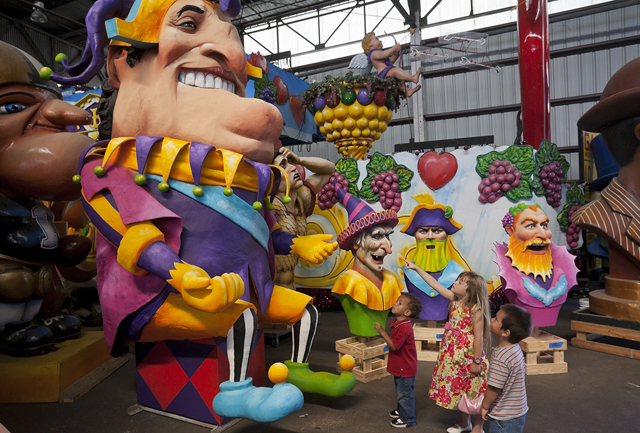
Inside Mardi Gras World 

Mardi Gras World: Since 1947, the folks at Mardi Gras World have designed and built the oldest and biggest floats for every Mardi Gras season. Each year they build and decorate over 500 of them. The museum offers tours that include a history of Mardi Gras in New Orleans and then take visitors to see the entire construction process. The museum is open year round as Mardi Gras in New Orleans never stops. 

Audubon Nature Institute: The Audubon Nature Institute includes a variety of museums and facilities including the Aquarium of the Americas (discussed above), as well as Audubon Park and Audubon Zoo. Located uptown--away from the Quarter and other tourist areas, Audubon Park has over 1.8 miles of jogging paths, ancient live oak trees, picnic areas, and playgrounds. The Zoo, located within a section of the park, houses over 2,000 animals including gorillas, oranguatans, and a rare white alligator with blue eyes. 


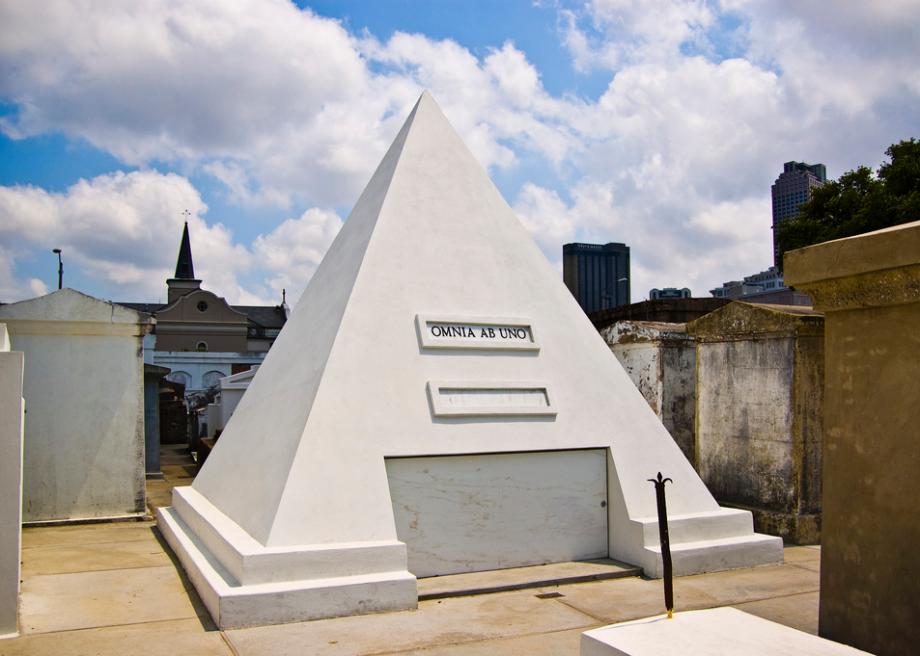
Nicholas Cage's Tomb 

Cemetery/Swamp Tours: Due to its low elevation, New Orleans cemeteries are unique in that they generally bury their bodies above ground. Inside the famed St. Louis Cemetery
 you can find the tomb of Marie Laveau, a famed 19th century Voodoo priestess. You can also see the future tomb of actor Nicholas Cage. If cemeteries aren't your thing, then try a swamp tour. A number of different companies offer tours of the famed Louisiana bayous. Riding in a swamp boat or even an airboat. You'll get to see cypress tress covered in Spanish moss, alligators, pelicans, and other wildlife unique to southern Louisiana. 

Monday, January 30, 2017

Crawfish Boil 2017 Bio: Benny Turner

            For the fourth year in a row, we’re proud to welcome back Benny Turner and the Real Blues with Sam Joyner to the 10th Annual DGA Family and Friends Crawfish Boil.   


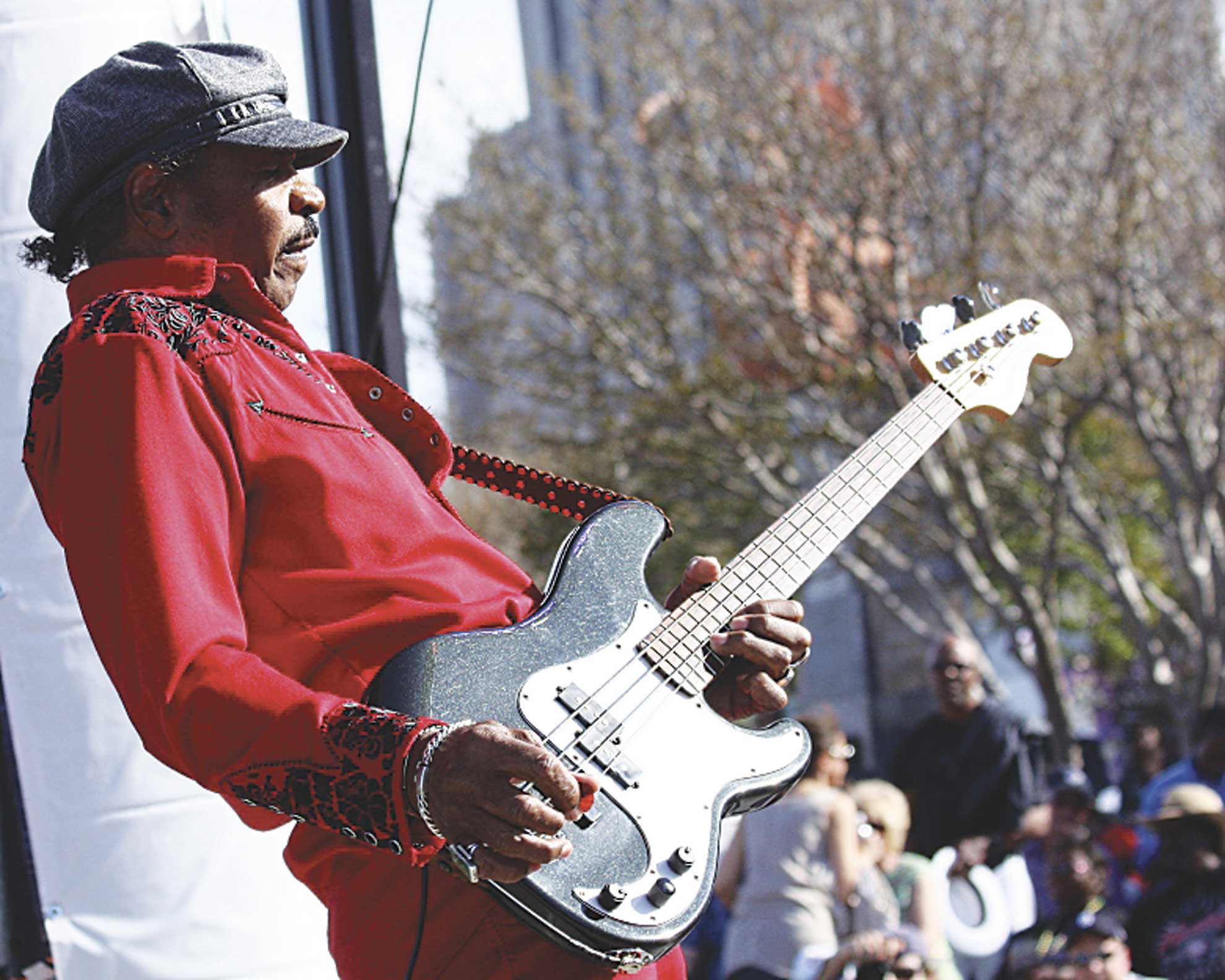
Benny Turner is a veteran of the New Orleans, Chicago, and Texas blues scenes. His connections to the history of the blues in America run deep. His brother was legendary blues artist and Rock and Roll Hall of Famer, Freddie King. Born in Gilmer, Texas, Benny and Freddie learned guitar from their mother and uncles. Freddie gravitated towards the guitar and performing while Benny enjoyed music and spending time with the brother he admired. The family moved to Chicago in the early 1950s and as Freddie’s fame and prowess with the guitar grew, his brother soon joined his band as a bass player. By the late 1950s, Benny had toured across the United States with R&B singer Dee Clark at venues like the Apollo Theater in New York City, the Uptown Theater in Philadelphia, the Howard Theater in Washington D.C., and the Regal Theater in Chicago. Benny also enjoyed a stint in the Soul Stirrers, a touring gospel music band, and introduced the bass to gospel music, laying the groundwork for modern gospel music which is heavily reliant on the bass. 

By the late 1960s, Benny returned to Chicago, playing in local bands and recording songs for the Leaner Brothers’ One-Derful and M-Pac! labels. He soon rejoined his brother, Freddie King, on the touring circuit. Alongside his brother, Benny performed with artists like Dionne Warwick, Memphis Slim, BB King, Solomon Burke, Eric Clapton, and Grand Funk Railroad. In December 1976, Freddie King passed away at the age of 42. Having lost his best friend, brother, and band mate all at the same time left Benny unable to perform. After two years away from music, famed Chicago blues artist Mighty Joe Young convinced Benny to join him on stage. Over the next few years, the two men travelled and performed together as Benny rejoined the blues scene. 


By the 1980s, Mighty Joe Young had retired from touring and Benny took another big step: moving to New Orleans and becoming the bass player and band leader for blues singer Marva Wright. Wright, known locally as the “Blues Queen of New Orleans,” toured all over the world and was a staple of the French Quarter music scene. After Wright died, Benny struck out on his own. In 2011, he released, “A Tribute to my Brother Freddie King” a collection of some of his brother’s most famous songs. In 2014, he released “Journey” playing homage to his history with the blues. His latest album, “When She’s Gone” mixes some of Benny’s original songs with old blues classics. He dedicated the album to his mother, Ella, the woman responsible for his and Freddie’s love of music.


            So come see this great blues artist perform on March 11, 2017 at Maison Lafitte, Mandeville, Louisiana. In the meantime, go to Benny’s website, read about his life, listen to some of his music, and buy an album or two in support of this legendary blues artist.

Tuesday, January 24, 2017

Crawfish Boil Hotels 2017

Just a reminder, the crawfish boil is being held at Maison Lafitte in Mandeville, Louisiana on Saturday March 11, 2017. Maison Lafitte is only about twenty minutes from our office.  So we won’t have to travel far, but most everyone else will. With that in mind, we figured it would be a good idea to make some hotel recommendations for our out of town guests.

Mandeville is on the north shore of Lake Pontchartrain. So we'll divide the recommendations depending on if you want to stay near the boil or in New Orleans. For anyone unfamiliar with the Greater New Orleans area, getting across the lake is a breeze thanks to the Causeway, spanning the lake. 


First, we'll cover some accommodations in the Mandeville/Covington area. Covington has the standard range of visitors' hotels, but we thought it would be better to recommend some places for guests who prefer a quiet location close to the boil. 

In Covington, one of the best B&Bs is Annadele's.  Annadele's is a lovely plantation home near Old Covington.  The grounds are charming and the rooms nice. Doug’s eldest daughter had her wedding at Annadele's.  The restaurant is also usually pretty good, and would be a nice place for breakfast if you stayed there. 

There's also the Southern Hotel in Covington.  It's located in the heart of downtown Covington and houses one of our favorite local restaurants, Ox Lot 9.  The restaurant also has a great bar that makes fantastic cocktails. The rooms are spacious and there's a spa located within the hotel. 

A room at the Southern Hotel 

Meanwhile on the south shore, New Orleans boasts a bevy of great places to stay. We recommend that visitors make their accommodations in the city as much of the trip to Covington is on the Causeway. And if you’re going to stay in New Orleans, you may as well stay in the French Quarter (especially if you’ve never been to New Orleans before). Staying in the Quarter is a unique experience and puts you right into the action.  Most of the city's tourist attractions are easily accessible and there’s always something going on nearby.

The Royal Sonesta Hotel is a good place to stay in the quarter. It is right on Bourbon Street which is a plus in many ways, although you will find it to be bustling, especially in early March.


Jamie likes the W New Orleans - French Quarter hotel. She and her husband have stayed there before and recommend it highly. Its restaurant, Bacco, is good, and the hotel is in a quieter part of the Quarter down on Chartres Street, but still only a couple of blocks from Bourbon.

The Omni on St. Louis is also good place to stay, and a bit more luxurious. You'll find rooms with a lovely view of the St. Louis Cathedral.

The JW Marriott is on Canal Street, and is very close to the Quarter. Here you can be within easy walking distance of the Quarter without being surrounded by it.

For the wedding of Doug’s younger daughter the guests stayed at the Courtyard Marriott, down by the river walk. It is not in the quarter, but still close to the action.

Tuesday, January 17, 2017

10th Annual DGA Crawfish Boil!


The 10th annual DGA Family and Friends Crawfish Boil is right around the corner!

Saturday, March 11th
12:00-5:00 PM 
Maison Lafitte, 402 Lafitte Street 
Mandeville, LA 

This year’s boil will once again be at Maison Lafitte in historic Mandeville, Louisiana. We are excited for another awesome crawfish boil jam packed with some of the best food, music, and fun you will have all year!

http://media.nola.com/st_tammany_community_news/photo/maisonlafittejpg-7dbb92ca2e6fd9e8.jpg
The home of this year's boil. 

The DGA crawfish boil has really taken off.  Every year the boil has been bigger, more exciting, and more fun than the year before.  The 2016 boil is going to be hard to top, but we are pulling out all of the stops to make our 10th crawfish boil the best one yet!  Formal invitations are going into the mail, so keep your eyes peeled and don't forget to wear your wristband.

If you are planning to come in from out of town, please let us know ahead of time and we will make sure to get you taken care of.  We can help you choose the right hotel, pick the best restaurants, and find the best places to visit before and after the boil to get the most out of your trip to the Big Easy.


This year's theme: God Bless the Bottom Feeders 

We have invited Benny Turner and the Real Blues with Sam Joyner back to the crawfish boil.  Benny and his band have been such a fantastic addition to the boil that we had to bring him back for the fourth straight year. The second band is The Mighty Pelicans from Austin, Texas. We liked them so much last year that we just had to have them back again. There will also be a third band-to be announced later. 


Stayed tuned in the coming weeks as we'll have more information about everything crawfish boil related. 

Tuesday, January 10, 2017

King Cake Season!

It is now after January 6, the Feast of the Epiphany, and therefore it is the beginning of a wonderful time of year: King cake season! For the uninitiated the King cake is a pastry of extraordinary simplicity and deliciousness. King cake season only lasts a short time and it is impossible to celebrate Mardi Gras without eating at least one.  

Cake to celebrate these guys? Sure, why not? 

Before we dive into the cake, let’s briefly explore its history. King cake season lasts from January 6 until Mardi Gras, i.e. today. Why January 6? January 6 is the Feast of the Epiphany, celebrating the visit of the Three Magi (or Kings) to the infant baby Jesus. The first King cakes emerged in France during the Medieval period as a way to celebrate this important moment in the Christian calendar. It soon became an important feature of Carnival (otherwise known as Mardi Gras). Carnival caught on in New Orleans thanks to the French who founded the city. Explorer Pierre Le Moyne d’Iberville landed on the coast about sixty miles south of present day New Orleans on March 2, 1699—the day before Mardi Gras. The French colony and the holiday stuck. The King cake, however, did not take hold until the early 1870s. French immigrants brought their King cake recipes with them and in classic New Orleans fashion, a new tradition merged with the old to create something wonderful. It took until about 1950 for the King cake to become a popular staple of New Orleans cuisine. In the past decade or so, King cakes have really come into their own. Popular interest in all things New Orleans grew after Hurricane Katrina and next day shipping have allowed King cakes to be shipped across the country, spreading their influence and deliciousness.

Is that the baby Jesus there?

Now let’s talk about the cake itself. The King cake began as a dry French bread dough topped with sugar with a bean inside. Over the past several hundred years the king cake has evolved into a sweet cake covered with sugar and icing. The dough is now braided, stuffed with cinnamon, cream cheese, or other fillings. The process of filling king cakes began in the early 1980s. The cakes are circular and hollow in shape. The colors atop a King cake are the same as the ones of Mardi Gras—purple for justice, green for faith, and gold for power.  King cakes also feature a small plastic baby hidden somewhere in or underneath the cake. Tradition holds that the person who finds the baby is responsible for buying the next cake. Some claim that the baby represents the baby Jesus. A 1990 interview with the owner of McKenzie’s, however, sheds serious doubt on this claim. Donald Entringer Sr. claimed to the Times-Picayune that McKenzie’s was the first to put the baby into a king cake. Entringer claimed that “I've heard people say it's supposed to represent the Christ Child, but that's not true. Why we picked this, I don't know. It was cute. It was just a trinket that happened to be a baby.” Whatever the truth may be, watch out for the baby when you bite into your first slice of King cake.

The former King Cake Capital of NOLA 

Unsurprisingly here at DGA, everyone has their own preferences for the best kind of King cake and where you should get it. Bill is a big fan of the King cakes from Butter Krisp Diner in Covington. His favorites are the strawberry cream cheese filled and any homemade king cake. Jamie and Benson both have a lasting affection for the King cakes once made by McKenzie’s. The Tastee Donut chain in and around New Orleans, however, purchased McKenzie’s old recipe and sells them at their stores. Jamie doesn’t like a whole lot of frosting. McKenzie’s consists of a simple brioche without cinnamon or filling. There’s only colored sugar topping the cake. McKenzie’s King cakes are stripped down to their roots, letting the dough and sugar shine. Matt prefers the Mandeville Bake Shop due its easy convenience near his house, though the best one he’s ever had came from Randazzo’s. And finally Doug’s favorite King cake is whichever one appears at his house. 

Tuesday, January 3, 2017

The Martian

            Ridley Scott has a remarkable hit and miss rate as a director. He’s handled sci-fi deftly (Blade Runner) and horribly (Prometheus). In The Martian, Scott and screenwriter Drew Goddard craft a briskly paced, humorous, and uplifting movie out of Andy Wier’s book. Thankfully The Martian dodges Scott’s recent history of tone deaf epic stories like Kingdom of Heaven and Exodus: Gods and Kings. Unlike in those movies, you’re never checking your phone wondering when The Martian is going to end. Matt Damon’s NASA astronaut/botanist Mark Watney must figure out a way to live long enough for NASA to come and rescue him—that’s the movie. The film feels like a throwback to those big budget star-studded World War II movies of the 1960s and 1970s. There are recognizable actors in nearly every scene, but unlike The Longest Day or A Bridge Too Far, Scott manages to tell his story quickly and efficiently and then gets the hell out of the theater. As a result, the film is well acted and executed, engages with the audience, and when you leave the theater you never need to revisit this world again.


            The plotting of The Martian, lifted largely from Weir’s book, is predictable but enjoyable. It’s the kind of movie where when someone says “and that’s if nothing goes wrong” and then something immediately goes wrong. You go into the theater knowing that Watney will survive, his crew will turn back to rescue him, and NASA will somehow save the day. This precognition doesn’t make the outcome of the film any less enjoyable. There’s a moment in the middle of the movie where the Chinese space agency comes in to save the day after NASA’s latest mission blows up in the sky above Cape Canaveral. While this plot point is taken directly from the book, it’s such an obvious play to the growing Chinese film market that it’s hard not to roll your eyes. Yet you forgive the film for its trespasses because the movie earns the moment. All the scientists and other people working at NASA are shown as hard working, well meaning, and caring. So why can’t the Chinese be too? The film has no ostensible villain at all. There’s no corrupt bureaucrat trying to undermine the mission. No rogue astronaut with an ulterior motive. The closest thing the film has to a villain is Jeff Daniels’ Teddy Sanders, the director of NASA. Yet you never hate Sanders, he’s just the man who has to balance the needs of the many with the needs of the few.

            The strength of the film comes from two areas: Matt Damon’s performance and Scott’s choice to present Damon’s messages to NASA directly to the audience. Breaking down the wall between the film and the audience, Watney’s smart-ass remarks and humor in the face of almost certain death inject energy into the movie that could easily descend into a survivalist slog. Damon remains one of Hollywood’s best and most charismatic leading men. He occupies as much of the movie as the director and other actors will let him. Think of him sharing scenes in something like Ocean’s 11 or going toe to toe with Robin Williams in the “It’s not your fault” scene in Good Will Hunting. Mark Watney is a better adjusted version of Will Hunting, brilliant, capable, and an unceasing smart ass.


Surrounding Damon are a stable of capable character actors. Sean Bean, whose face looks like a deflated football, plays the insubordinate NASA flight director. Kristen Wiig is the perpetually concerned PR lady. Most of her scenes involve her standing there with her hands clasped over her mouth. Donald Glover and Chiwetel Ejiofor have roles as a NASA scientist and mission director. The rest of Watney’s crew, led by Jessica Chastain, are broadly sketched, but they each have something to play. Chastain is the conflicted leader with a love of disco music. Michael Pena is the family man, and Sebastian Stan and Kate Mara fall in love.  Goodard’s screenplay doesn’t draw out the full potential of the supporting cast, but at least it doesn’t leave them stranded in space.

            The greatest strength of The Martian lies in its unrelenting optimism. The film postulates that smart people, when confronted with a problem, can buckle down and solve it. Damon’s Watney despairs a little at first, then decides he wants to live, declaring that he’s going to “science the shit out of this thing.” As we watch Watney and NASA struggle to work through the myriad of problems confronting them, we’re comforted to know that these are smart people doing the best they can. Everyone applies their years of experience and training and works the problems in front of them. Everyone here is competent and well intentioned. Human ingenuity and creativity yield solutions, not God or some McGuffin. The central belief of the film is that the scientific method and critical thinking, if properly applied can solve any problem. Watney says this explicitly in an unnecessary scene tacked on at the end of the movie. Weir and Goodard’s positivist vision stresses that the solutions to our greatest problems come from ourselves.

            And in a movie era featuring orgies of earth shattering destruction, it’s nice to know that we can fix our problems rather than be overwhelmed by them.