Tuesday, March 31, 2015

Jimmy Pays the Price

With the crawfish boil over, now we can turn our attention to one of Louisiana’s other great traditions: the Saints. Unfortunately the 2014 season fell somewhere between disappointment and disaster. Pundits, Saints fans, and even the team thought the Saints would be a Super Bowl contender. With little salary cap space last offseason, the Saints re-signed tight end Jimmy Graham and added safety Jarius Byrd to bolster the defensive backfield and put the team over the top. Instead, injuries and ineffectiveness plagued the team throughout the season. A heartbreaking Week 1 loss to the hated Falcons set the stage for the miserable season that followed. By the end of the year, the Saints were left wondering where it had all gone wrong.

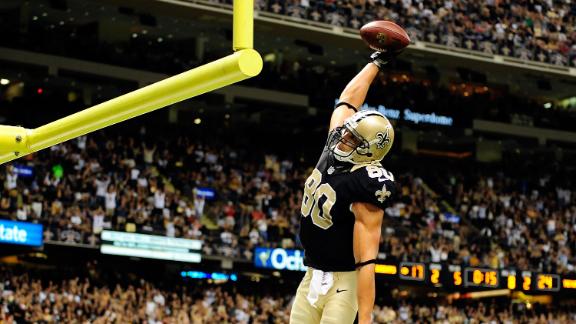
          This week let’s focus on the most significant move the Saints have made this offseason: the trade of star tight end Jimmy Graham and a fourth round pick (109th overall) to the Seattle Seahawks for center Max Unger and a first rounder (31st overall). We’ll break down this trade in a few ways; first, did the Saints get good value for Graham? And second, what does this mean for the Saints going forward? 
Bye Jimmy! 

          Using the draft value chart created by Chase Stuart of Football Perspective (based on the value produced by each pick over a 30 year period), the Saints traded away the 109th pick, worth 4.7 points of approximate value (a measure of individual player production developed by Pro-Football Reference). In return, they received the 31st pick worth 12.7, for a net of 8 AV. 8 points of AV is equivalent to the 65th pick in the draft (the 1st pick of the third round). On first glance, it seems impressive that the Saints netted a 1st rounder for Graham. When you factor in the 4th round pick, the trade is much less than it seems. The values of Graham and Unger going forward are difficult to discern. Unger missed ten games last season due to injury and Graham has been similarly hampered by the injury bug. What is clear is that the Saints traded away their best offensive player not named Drew Brees for a starting center and the equivalent of the 65th pick in the draft. Hardly an impressive haul.

          The Graham trade does provide the Saints something they desperately needed: salary cap relief in 2016 and 2017. As result of the 4 year, 40 million dollar contract signed last year, Graham counted eight million against the cap this year, nine million in 2016 and ten million in 2017. By trading him the Saints paid a heavy price this year. The Saints shed Graham’s salary in the trade, but the remainder of his salary bonus accelerated onto this year’s cap. By trading him, Graham will eat up nine million dollars in cap space this year. After this year, however, Graham is off the Saints books, freeing up nineteen million dollars for 2016 and 2017. The relief will be especially useful in 2016. Currently, the Saints have 131.5 million committed to the cap for 2016, with Graham’s contract they would have been perilously close to the salary cap ceiling again. Now they have money to devote to other areas of the roster, like signing pass rusher Cameron Jordan to a contract extension.

Hi, Max! 

          What does this mean on the field? The trade cost the Saints their best offensive weapon. As a tight end, Graham caused matchup problems for opposing defenses, requiring double teams and opening up other options for the rest of the offense. While the Saints seem high on backup Josh Hill, he can’t and won’t replace Graham’s production. With the downgrade at the tight end spot, the improvements will have to come elsewhere. Unger should bolster the Saints interior offensive line, helping out in both pass protection and the run game. Last season, with Unger in the lineup, the Seahawks averaged 203.8 yards per game rushing. Without him, the Seahawks averaged nearly fifty yards fewer per game (153.9). A better run game will help, but it can’t replace Graham.


          Overall, it’s hard to see how the trade helps the Saints in 2015. They traded away the second best tight end in the NFL for a starting center and the equivalent of the 1st pick in the third round. The deal provides salary cap relief, but not until 2016 and 2017. Last season, the Saints mortgaged their salary cap future to make a Super Bowl run. This offseason that mortgage came due. 

Tuesday, March 24, 2015

Crawfish Boil 2015 Recap

          Saturday March 14 was the 8th Annual DGA Family and Friends Crawfish boil and we are happy to report that it was a smashing success. In the mid-afternoon, the sun broke through after days of rain in south Louisiana. Winos and Tacos once again served as a great location. There was abundant alcohol, crawfish, and we polished off six dozen cupcakes (Benson’s son Ieuan had at least 3). Unfortunately Jamie was at trial and couldn’t make it home in time. Her husband Ryan, however, ably carried on in her absence, watching NCAA basketball at the bar, as he always does.

It's back again. 

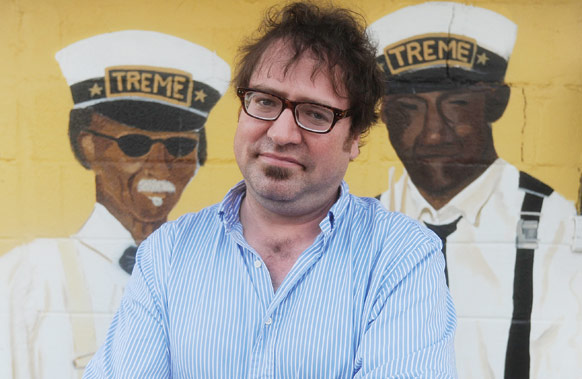
          The boil began with Doug’s introductory address on this year’s theme: Do You Know What it Means. DGA favorite Davis Rogan (who fulfilled a longstanding promise to Doug and brought his lovely wife Stephanie to the show) then played his own version of the Louis Armstrong classic, Do You Know What It Means to Miss New Orleans. He followed with a set mixing some of his songs from his new CD (So Long) as well as some classic Davis songs (Hurricane, New Ninth Ward). At one point during the show, the DGA employees as well as their spouses came up on stage and served as the background singers for the song, Mr. Rogan, Mr. Rogan. Mostly they just had to chant “Mr. Rogan, Mr. Rogan” on queue. Doug and Mary exhibited a great amount of enthusiasm. The video of the performance will be available on a future blog post.

All the crawfish... 

          After loading up on more crawfish, jambalaya, and tacos, the boil kept plugging along. Up next was the Philadelphia based Dirk Quinn Band. Dirk proved himself a talented and inventive guitarist. The band imaginatively fused funk and jazz and entertained a whole lot of people along the way. At one point, Mark Levron, Davis’s longtime trumpet player, joined in. Mark’s willingness to jump in and play epitomized what we all love about the boil- people coming together to share a sense of friendship and camaraderie. The Dirk Quinn Band was first instrumental band ever to the play at the boil and they gave us a great show.

Benny Turner knows how to put on a show

          We ended with Benny Turner and the Real Blues featuring Sam Joyner. Benny was the big surprise of last year’s boil. We brought him in knowing that he had the resume of a top flight blues musician and he blew us all away. He sang, he mingled with the crowd, and offered a performance that none of us had ever seen before. We knew we had to have him back again. And this year, Benny managed to do it all again. It’s difficult to render Benny’s performance into words. He brings an infectious spirit and enthusiasm. He not only feeds off the energy of the crowd, he elevates it.


          At around five o’clock or so, the music had finished and the crowd began to disperse. Guests left with bellies full of food and the souls bolstered by some truly wonderful music. And the best part? We get to do it all again next year. 

Tuesday, March 10, 2015

Crawfish boil: This Saturday!

          So we’ve gone over the history of crawfish, taught you how to eat them, told you where to stay, where to eat, and things to do in New Orleans. Now there’s only one more thing to do, actually have the crawfish boil. So let’s run down the full details of the bands, location, and the other important info.


          When: This Saturday March 14, 2015 at 12:00 P.M.

          Where: Winos and Tacos
                   321 North Columbia Street
                   Covington, LA 70433

          First a little background history, this will be the 8th DGA Family and Friends Crawfish boil. Over the years, we have been thrilled to watch the boil grow in size and scope. It started out as a celebration consisting mostly of the DGA employees, their families, and friends from Louisiana. It’s changed locations and bands a few times, but gotten bigger and better every single year. Now we have people who fly in from across the country to spend an afternoon with good food, friends, and music. The boil is an opportunity to share our traditions and we look forward to extending some of that famous Louisiana hospitality.

How could we say no to that face? 
           Now that we have those important details out of the way, let’s get down to the music. Leading off will be DGA favorite, Davis Rogan. This is Davis’s fourth consecutive appearance at the crawfish boil. He never fails to entertain and we’re thrilled to have him back. 


Next up, will be a new band all the way from Philadelphia, the Dirk Quinn Band. The Dirk Quinn Band is known for its experimental take on funk and jazz.

He was so good, we just had to bring him back. 

And finally, we’ve brought back Benny Turner, who if you remember from last year’s boil electrified the audience by playing while sitting in the crowd. So he will close out what will (hopefully) be the biggest and best crawfish boil so far. It’ll take a lot to top last year, but we think we can do it. 

          See you Saturday! 

Tuesday, March 3, 2015

Reminder: How to Peel Crawfish

With the crawfish boil coming up next Saturday (!), we thought it would be a good idea to offer a refresher on how to eat crawfish. Peeling them can seem daunting, but with a little bit of practice it's no big deal at all. After a few dozen, anyone can become a crawfish peeling pro. So read up and then next Saturday you can eat 'em just as fast as you can peel 'em. 


Today I am going to show all of ya'll how to peel a crawfish.  The process is relatively simple, and a well-coooked crawfish should give even inexperienced folks little trouble.  
Before you start peeling, remember that crawfish boiled live typically have curled tails, such as the one in the image above.  Those that were dead when they went in the boil (there’s always a few) have flat tails and mushy meat.  You can toss those suckers into your pile of shells if you like.

You might have heard of the twist, pinch, and suck method of peeling crawfish.  This refers to twisting off the head, pinching the tail, and sucking the head.  This is the basic method we’re going to learn, although sucking the head is entirely optional.  Most crotchety Cajuns suck the heads to put newcomers off their crawfish, but there’s also a culinary reason to do it and I’ll explain that at the end.

Although these colloquial terms are wildly inaccurate in terms of a crawfish’s anatomy, the two basic parts you need to know about are the “head,” the main body of the crawfish, and the “tail,” the segmented abdomen of the crawfish. 
To start peeling, grasp the head in one hand and the tail in the other. 

Next, twist the head and pull it away from the tail. 


At this point, you can pinch the tail and pull out the meat with your teeth, but that takes some crawfish experience.  Being new to peeling crawfish, you will have more success if you peel the first segment of the shell off of the tail. 


You can then flip the tail over, use your thumb to pinch the tail at the base, and then pull out the meat.


Last, but not least, you can suck the head.  The reason to do this is that most of the fat is in this part of the crawfish and it doesn’t always come out with the tail meat.  Like crabs, crawfish fat is extremely tasty and it holds a remarkable amount of flavor. You also get a good taste of the spicy boil from sucking the head.

Tuesday, February 24, 2015

History of Crawfish

          We’ve previously covered things to do and places to eat in New Orleans. Now as we get closer to March 14, it is worth investigating the history of these delicious crustaceans.

          Crawfish season lasts from late February through early June. Crawfish live and grow in bayous that dot the Mississippi River and its estuaries. Before European settlement, the creeks and lakes of southern Louisiana teemed with crawfish. For centuries, local Native Americans caught crawfish by baiting wooden reeds with venison. They would dip the reeds in the water and pull them up—with crawfish dangling off the reeds. Using this method Native Americans caught these crustaceans by the bushel. Consumption of crawfish spread next to the Acadians. They arrived in Louisiana in the 1750s. The Acadians were French settlers who had been expelled from Canada by the English during the Seven Years War. The Acadians began incorporating local seafood into their cuisine. Over time, these delicious crustaceans became a staple of Cajun cuisine. Local Cajun legends offer a slightly different history of crawfish. They claim that lobsters followed the Acadians down from Canada. When they entered the warmer waters of the gulf, the lobsters shrank to their present, diminutive size.

Watch out... it'll get you. 

          The commercial sale of crawfish began only in the late 1800s. The first recorded harvest of crawfish occurred in 1880. The crawfish, raised in the Atchafalaya Basin, resulted in a  harvest of 23,400 pounds, worth about $2,140 (about $51,000 in today’s money). In 1908, the U.S. Census Bureau recorded that Louisiana produced about 88,000 pounds of crawfish per year, worth about $3,600 (about $93,000). The Great Depression of the 1930s drove the price of crawfish down to as low as 4 cents per pound. Technological advancements, including trucking, railroads, and refrigeration allowed for the movement of live crawfish from the rural bayou to urban centers like Baton Rouge and New Orleans. The introduction of traps and nets allowed for the collection of greater numbers of crawfish. In the 1930s, Louisiana began to cultivate the production of crawfish on farms. Rice had long been a staple of bayou farmers. In order to gain more income, rice farmers began re-flooding their fields in order to produce harvests of crawfish in the winter and early spring. This practice soon spread across Louisiana wherever low-lying ponds and marshland could be found.

A typical haul. 

          The process of farming stabilized crawfish production. Before farming, the harvest in any given year depended on the water levels in the Atchafalaya Basin. Thus the market fluctuated wildly from year to year. By the mid-1960s, over 10,000 acres of farms were spread across Louisiana. In the decades since, crawfish farms have only continued to grow to approximately 120,000 acres. Louisiana accounts for 85%-95% of total U.S. crawfish production. In 1960, the community of Breaux Bridge was named the crawfish capitol of the world and held a yearly crawfish festival.  With the increasing consumption and availability of crawfish its profile began to grow. Restaurants began serving crawfish on their menus and the famed dish, crawfish etouffee was born. The process of eating crawfish then passed in the local consciousness as a way to celebrate local food and served as another way for Louisianans to come together and celebrate their home.  Today the industry accounts for 7,000 jobs and about 300 million dollars in revenues.

The end result. 

The process for cooking crawfish has stayed the same (and this may attest to the longevity of crawfish consumption); get a pot of water boiling (seasoned of course), add the live crawfish, let cook for several minutes. Then eating—well peeling first, then eating—the crawfish on newspaper covered tables until you can’t eat them anymore. It’s a tradition that we look forward to upholding on March 14. 

Tuesday, February 17, 2015

Things to EAT in New Orleans

            Now that we’ve covered some places to go in the French Quarter, it’s time to get down to it. Where are you going to eat in New Orleans? We’re going to guide you to some of the best dining spots in the city.

Café Du Monde: We’re starting off with the obvious, but sometimes what’s obvious is best. You never forget your first beignets. It’s New Orleans, it’s beignets, don’t over think it. Stroll on down Decatur and stop when you see the famous exterior. Go in, order the beignets, and blow powdered sugar on your friends and family. Enjoy a café au laut and watch the world go by. If you walk out of there and you’re not covered in powdered sugar, you’ve done it wrong.

Follow the sign, delicious food waits inside. 

Green Goddess: If you want eclectic modern New Orleans cuisine go no farther than the Green Goddess. Make sure you keep your eye out it’s tucked away in a narrow alley just off of Bienville Street. The unassuming exterior masks the culinary creativity within. The menu changes with the seasons and takes a global approach, fusing Louisiana classics with ideas from around the world. Benson and his wife Liz swear by the food and the cocktails (especially the cheese plate).

Killer Poboys: Nestled in the back of the Erin Rose Bar is one of the best kept secrets of the New Orleans culinary scene, Killer Poboys. The Poboy is a traditional New Orleans sandwich consisting of some kind of protein, generally roast beef or fried seafood served on New Orleans style French bread (there’s an entire festival devoted to them). Done right, the poboy is a blank canvas for culinary innovation. And Killer Poboys does them right.

Inside the French Quarter Camellia Grill. 

Camellia Grill: There are two locations of the Camellia Grill, the original in Uptown and a newer location in the quarter. The menu is straightforward diner food, done right. Order a couple of burgers, some fries, and a chocolate freeze to drink. Dessert, though, is where the Camellia Grill shines. Order the pecan (pronounced pe-can NOT pee-can, pronounce it wrong and risk our wrath and mockery) pie and enjoy the best pie you’ll ever eat. The secret? They warm it up on the grill, next to the burgers. No, it’s not healthy, but you’re in New Orleans so who cares?

Déjà Vu Bar and Grill: Open 24/7/364, Déjà Vu is the place to go if you’ve been out all night drinking and need some good, filling food. They serve breakfast all day including southern staples like biscuits and gravy. Their menu includes burgers, seafood, and a host of Louisiana classics. Benson also vouches for their beer selection.

So much gelato, so little time. 

La Divina Gelateria: And we’d be remiss if we didn’t recommend at least one dessert place. La Divina makes all of their gelato in house and from scratch. The owners, Katrina and Carmelo Turillo lived in Florence and loved taking late night walks and getting gelato. So they decided to study how to make gelato and brought it over to Louisiana. They opened in February 2007 after being delayed several years by Hurricane Katrina. The shop has four locations, including one in the French Quarter. So if you’re talking a late night walk, stop in for some of the best gelato outside of Italy.

           We’re less than a month away from the crawfish boil now. We hope to see you there!

Tuesday, February 10, 2015

Things to Do in New Orleans (Non-Food Edition)

          Last week we highlighted the Super Sunday parade of Mardi Gras Indians that will take place on the day after the crawfish boil. This week we’re going to cover some of our favorite spots and places to visit in the French Quarter.  (Each suggestion has a link to a google map to show you where everything is.)  

Inside Three Muses

Frenchman Street/Three Muses: Technically Frenchman street is in the Marigny and not the quarter, but it’s close enough. Jamie highly recommends going to the Three Muses, a bar/music hall. DGA favorite Davis Rogan can often be found playing there. In the years since Hurricane Katrina, Frenchman has become the center of musical culture in the city. Go in, order some food (the food is as good as the music), and listen to some of the best music New Orleans has to offer. Remember to tip the band and thank us later.  

French Market: The French Market is a more traditionally touristy spot. This open air market features a wide range of vendors. It has music, food, and shopping.  It spans about five blocks down by the river. Since it opened in 1791, the market has long been a center of the city’s economy. Over the years, Native Americans, African Americans, Americans, Spanish, French, Italian, German, and Caribbean immigrants all mingled together, selling their wares. Like Jackson Square, the Market encapsulates the history of New Orleans.

There hero of New Orleans in foreground, St. Louis Cathedral in the background.
  
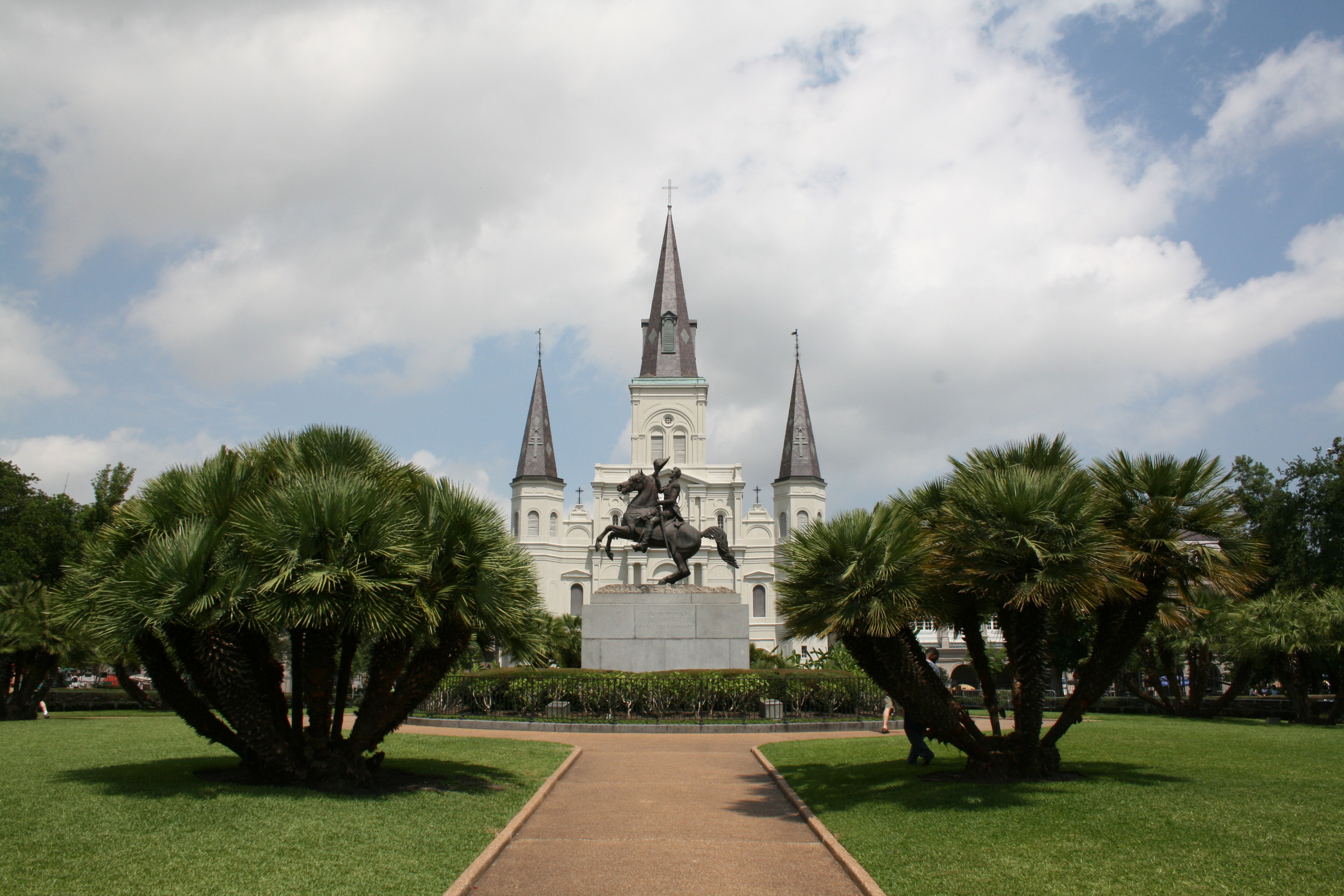
Jackson Square: If you’re in the French Quarter it’s impossible not to walk around Jackson Square at some point. The square is named for Andrew Jackson, who famously defended the city from the English during the War of 1812 (even though the battle took place in Chalmette and the war was already over). A close look at the square and you can see the entire history of the city. The St. Louis Cathedral sits at the head of the square and is the oldest cathedral in America. The site has housed a church continuously since 1718. There has been a church on the site since 1718. Adjacent to the cathedral is the Cabildo, the seat of the French and then Spanish colonial government. On the other side of the Cathedral sits the Presbytere, which was used for commercial and judicial purposes. The Cabildo and Presbytere are now part of the Louisiana State Museum.

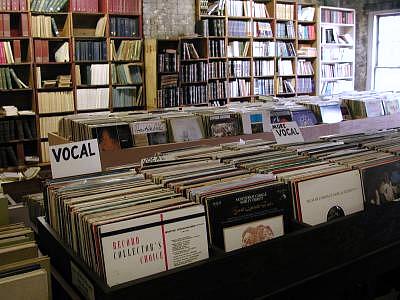
Beckham’s Books: Every major city has a hidden gem of a used bookstore, in New Orleans, Beckham’s is it. Beckham’s has great prices and a wide selection. This independently owned book store has been on Decatur Street since 1979. It’s a great way to spend an hour browsing their massive collection. Side note: from the outside, Crescent City Books (just a few blocks over) looks like the used book store you want. But it’s not. Crescent City is mostly a front to sell overpriced “authentic” New Orleans merchandise to hipsters.

Inside Beckham's Books 

Aquarium/Riverwalk: Located at the foot of Canal Street, the Aquarium features a 400,000 gallon tank filled with coral reefs, sharks, and other aquatic life that populates the Gulf of Mexico. After touring the exhibits, take a few minutes and watch the sharks and turtles swim by. It’s a cool sight to see and well worth your time. The aquarium also has stingray touch pool, sea otters, and a replica Amazon rainforest. Additionally you can walk along the Riverwalk to get to the Aquarium and watch the ships sail past the city.

           Stay tuned for next week, where we will tackle the all-important issue of where to eat in the Quarter. Because let’s face it, if you came to New Orleans, you came here to eat.